
Why Live Bee Removal is the Right Choice.
Many pest control companies use pesticides to kill bee colonies. While this method may seem quick, it has long-term consequences for both the environment and your home. Here’s why live bee removal is a better option:
Saves Pollinators – Bees are responsible for pollinating about 75% of the fruits, vegetables, and nuts we eat.
Eco-Friendly Approach – No harmful chemicals that can affect soil, air, or water quality.
Prevents Structural Damage – Removing both the bees and the hive prevents honey from melting and attracting ants or rodents.
Long-Term Solution – Relocation ensures bees don’t just move a few feet away and return.
Supports Local Agriculture – Relocated bees continue to contribute to Florida’s farming industry.
Why Live Bee Removal Is the Right Choice.
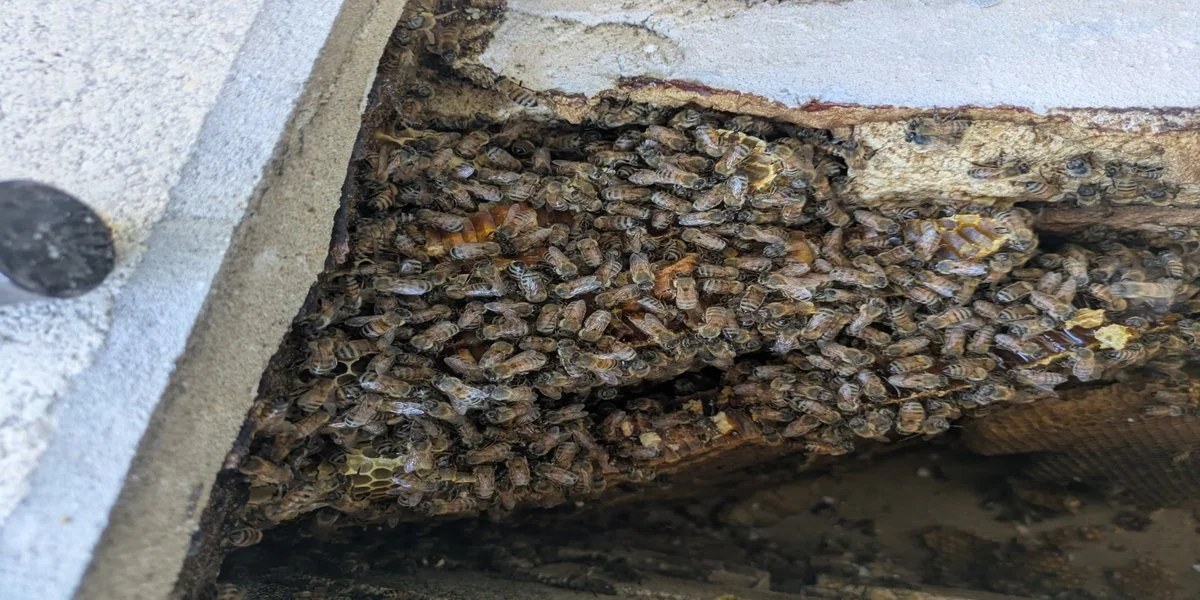
Our Orlando bee removal experts safely relocate honey bees without using chemicals.
Honey bees are important pollinators. They help support flowering plants, gardens, and crops. When a colony settles in an unsuitable location, removing it responsibly can help address the property concern while giving the bees an opportunity to survive.
Here are several reasons to consider humane bee removal:
Protects Honey Bees: Live removal focuses on collecting and relocating the colony rather than killing the bees automatically.
Supports the Environment: Honey bees pollinate plants and help maintain healthy plant communities.
Addresses Hidden Hive Material: Removing an established colony may also require extracting honeycomb, wax, and stored honey from the structure.
Helps Protect Your Property: Leftover honeycomb and honey can leak, create odors, and attract other pests. Proper removal and cleanup help address these concerns.
Provides a More Complete Solution: Removing the visible bees alone may not resolve an established hive inside a building. The nesting cavity and remaining hive materials should also be assessed.
Learn more about the process in our guide to live bee removal without chemicals.
Where Honey Bees Commonly Nest in Orlando Homes.
Orlando homes have several features that can provide sheltered spaces for honey bee colonies. Small openings around exterior construction materials may allow bees to enter wall cavities and roof spaces.
Common nesting locations include:
Attics: Small gaps around rooflines, vents, and other openings can provide access to protected attic spaces.
Exterior Walls: Bees may enter through cracks, utility openings, or gaps in siding and stucco before building honeycomb inside a wall cavity.
Soffits and Eaves: These shaded areas can offer protection from rain and direct sunlight.
Sheds and Garages: Undisturbed spaces around storage buildings may attract nesting colonies.
Trees and Hollow Branches: Natural cavities can provide suitable nesting locations, particularly when they are close to residential properties.
If you notice bees repeatedly entering one opening, do not assume the colony is small. A professional inspection can help determine what is happening inside the structure.
How to Recognize a Bee Colony on Your Property.
Seeing a few bees around flowers is normal. However, repeated activity around one specific opening may indicate an established colony.
Watch for these signs:
Frequent Bee Activity: Many bees flying in and out of the same small opening.
Buzzing Sounds: Persistent buzzing coming from a wall, ceiling, or attic.
Honey or Wax Stains: Sticky residue or visible wax around an opening may indicate hive activity.
Unusual Odors: A strong, sweet smell may develop when honey or old hive material remains inside a structure.
Visible Swarms: A group of honey bees clustered on a tree branch or another outdoor surface may be a temporary swarm.
Not every bee sighting means a colony has settled inside your home. However, repeated activity at a structural opening deserves attention.
For more information, read our article about identifying a bee infestation by sound or smell.
How Professional Live Bee Removal Works in Orlando.
Every bee removal job is different. The method depends on the colony's location, the type of construction, accessibility, and the amount of honeycomb present.
A typical professional bee removal process may include the following steps:
1. Property Inspection
The professional examines bee activity, identifies possible entry points, and assesses where the colony may be located.
2. Accessing the Hive
If bees have established a colony inside a wall, attic, or soffit, carefully creating an access point may be necessary. The approach depends on the building materials and the location of the hive.
3. Live Bee Extraction
Specialized equipment and appropriate handling techniques may be used to collect the bees while minimizing harm.
4. Honeycomb Removal
Accessible honeycomb, wax, brood, and stored honey may need to be removed. This step is important because leftover hive material can create problems after the bees are gone.
5. Relocation When Possible
Collected honey bees may be transferred to a suitable managed hive or another appropriate location, depending on the condition of the colony and the circumstances of the job.
6. Cleanup and Entry-Point Recommendations
The affected area should be assessed for remaining hive material. Necessary cleaning, sealing, and structural repairs should be discussed as part of the removal plan.
To understand the process in more detail, see our guide to step-by-step live bee removal without chemicals.
Why Orlando Homeowners Contact Eco Bee Removal.
Choosing a bee removal company is about more than getting bees out of a building. Homeowners also need to understand what happens to the colony and what work is required after removal.
Eco Bee Removal focuses on live honey bee removal and relocation throughout Florida. Our approach is based on offering an alternative to spraying and killing honey bees whenever possible.
Property owners contact us for help with:
Honey bee colonies inside walls and structural cavities.
Bees nesting in attics, soffits, and roof spaces.
Honeycomb removal from residential structures.
Bee swarms and accessible outdoor colonies.
Information about live bee relocation options.
Our team can discuss the circumstances of your bee problem and explain the available service options. Service availability and the appropriate removal method depend on the location and conditions of the job.
Learn more about who we are and our commitment to saving bees.
Why Removing the Entire Hive Matters
Removing visible bees does not necessarily mean the job is complete.
An established colony may leave behind honeycomb, wax, brood, and stored honey. In Florida's warm climate, remaining honey can soften or leak from an enclosed space. It may also attract ants and other pests.
Old hive material can produce unpleasant odors and create additional cleanup concerns. Remaining comb and residue may also make the cavity attractive to future bee activity.
For these reasons, homeowners should ask whether a proposed bee removal service in Orlando includes honeycomb extraction and cleanup, especially when the colony is inside a wall or roof space.
How to Help Prevent Bees from Nesting Again
After a colony has been professionally removed, addressing potential entry points can help reduce the likelihood of another nesting problem.
Consider these practical steps:
Seal suitable cracks and gaps around exterior walls and rooflines after removal is complete.
Install appropriate screens over vents where necessary.
Inspect soffits, eaves, and utility openings for damaged or loose materials.
Keep sheds and garages in good repair.
Check for new bee activity around previously affected areas.
Ask the removal professional whether additional cleaning or structural repairs are recommended.
Remember that sealing an active hive entrance before the colony has been properly addressed can make the situation worse. Do not block the opening while bees are still using it.
How Much Does Live Bee Removal Cost in Orlando?
The cost of live bee removal in Orlando depends on the details of each job. A colony inside an easily accessible tree may require a different approach from one established deep inside a wall or attic.
Factors that can affect the price include:
The size and condition of the colony.
The location and accessibility of the hive.
The type of building materials.
The amount of honeycomb and stored honey present.
Whether structural access, cleanup, or additional work is required.
Eco Bee Removal offers a free consultation so property owners can discuss their situation and available options before deciding how to proceed.
For a more accurate estimate, describe where the bees are entering and whether you have noticed honeycomb, buzzing sounds, or visible bee activity.
Call (888) 282-1886 to discuss your bee removal options.
Frequently Asked Questions About Bee Removal in Orlando
1. Can honey bees be removed without killing them?
Live bee removal and relocation may be possible, depending on the colony's location, condition, and accessibility. Eco Bee Removal focuses on live honey bee removal and relocation whenever possible.
2. How do I know if bees are living inside my Orlando home?
Repeated bee activity around one opening, buzzing inside walls or ceilings, and visible honey or wax residue may indicate a hidden colony. A professional inspection can help determine whether a hive is present.
3. Do you remove bees from walls and attics?
Eco Bee Removal handles live bee removal requests involving structural locations. The available approach depends on the hive's location, access requirements, and service availability.
4. Does bee removal include honeycomb extraction?
Not every bee removal service includes honeycomb extraction. Ask whether the quoted work covers the removal of bees, comb, stored honey, and remaining hive material.
5. How much does bee removal cost in Orlando, FL?
Pricing depends on the colony's size, location, accessibility, and the work required. Contact Eco Bee Removal for a free consultation and information about your options.
6. Should I seal the opening where bees are entering?
No. Do not seal an active entrance before the colony has been properly assessed and removed. Blocking the opening may trap bees inside the structure.
Choose a Bee-Friendly Solution for Your Orlando Property
A honey bee colony inside your home can be concerning, but extermination is not the only option. With the right assessment and removal approach, it may be possible to protect your property while giving the bees an opportunity to continue their important work as pollinators.
If you have discovered bees in your Orlando attic, wall, soffit, roofline, or another part of your property, contact Eco Bee Removal to discuss your options.
Eco Bee Removal provides live honey bee removal and relocation services throughout Florida, subject to service availability.
Call (888) 282-1886 for a free consultation.
Save bees and bee blessed!