
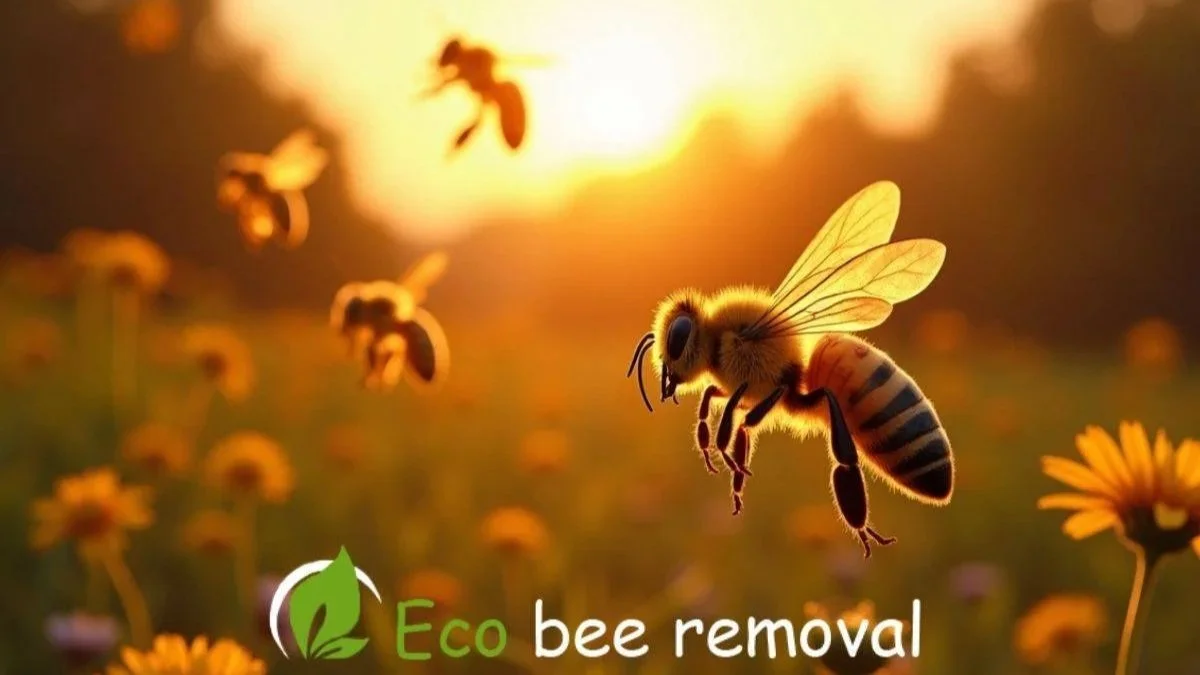
Honey bees flying back to a hive at sunset
Bees are some of the most extraordinary navigators in the natural world. Whether they are foraging miles away from their hive or avoiding obstacles in a crowded landscape, bees have an impressive ability to find their way home with incredible precision. Their navigation skills are so advanced that scientists compare them to tiny flying GPS systems — but nature designed them long before technology existed.
Understanding bee navigation and homing behavior isn’t just fascinating. It also matters for beekeepers, homeowners, and bee-removal professionals who want to protect colonies and support pollinator health. This blog explains the hidden science behind how bees travel, communicate, remember, orient themselves, and safely return home.
1. Why Bee Navigation Matters
Honey bees and wild bees leave the hive daily to gather nectar, pollen, water, and tree resins. A single foraging trip can take them several miles away. Despite these long distances, bees return to the exact hive entrance with remarkable accuracy.
This is not luck — it’s biology, memory, and communication working together.
Understanding bee homing behavior helps:
Beekeepers manage colonies more safely
Eco-friendly bee removal experts relocate hives without disorienting bees
Homeowners recognize how bees move within structures
Scientists study how environmental changes affect pollinators
Bees depend on their navigation abilities for survival, and every part of their system is perfectly adapted to their small size and fast-moving lifestyle.
2. The Secret Tools Bees Use to Navigate
Bees rely on multiple “navigation systems” at once. Each one adds another layer of accuracy to their journey.
A. Vision and Landmarks
Bees see the world differently from humans. Their eyes detect:
Ultraviolet (UV) light
Patterns on flowers are invisible to us
Wide panoramic views that help them map the landscape
As bees fly, they memorize:
Tree shapes
Rooflines
Roads
Open fields
Shadows
Colors and textures
This visual memory forms a mental map of their surroundings. Even if the environment changes slightly, bees use their stored map to reorient themselves.
B. The Sun Compass
One of the most astonishing abilities bees have is their sun-based navigation.
Bees know where the sun is at all times, even on cloudy days. They use:
The sun’s position
The angle of sunlight
Polarized light patterns
The time of day
The bee’s internal clock helps correct the sun’s movement across the sky. This allows bees to travel in a straight line toward food and return home using perfect direction.
C. Magnetic-Field Detection
Bees also sense Earth’s magnetic field, similar to how birds navigate during migration. Tiny particles of magnetite inside their bodies act like a natural compass.
This magnetic sense becomes especially important when:
It’s dark
Weather is cloudy
Landmarks are unfamiliar
Bees travel long distances
This backup system keeps the colony from becoming lost.
D. Smell and Chemical Communication
Bees have powerful scent receptors. They can recognize:
The smell of their hive
Pheromones produced by their queen
Nectar-rich flowers
Warning signals from other bees
Scent plays a major role in homing behavior. When bees get close to their hive, they smell the colony’s unique chemical signature — like a natural scent beacon guiding them home.
3. The Famous “Waggle Dance”: Nature’s GPS System
One of the most well-known examples of insect intelligence is the honey bee waggle dance. This behavior is a form of communication that helps other bees find food.
When a forager discovers a good nectar or pollen source, she returns to the hive and performs a dance that explains:
Direction (based on the sun’s position)
Distance (length of the dance)
Quality of the food source
Other bees watch the dance, understand the message, and fly directly to the location — even if they have never been there before.
This is one of the clearest examples of non-human symbolic communication in nature.
4. Homing Behavior: How Bees Return to the Hive
Each step of the return journey is intentional. Here is how bees manage to come back safely:
Step 1: Orientation Flights
Young bees perform small “practice flights” around the hive.
They fly:
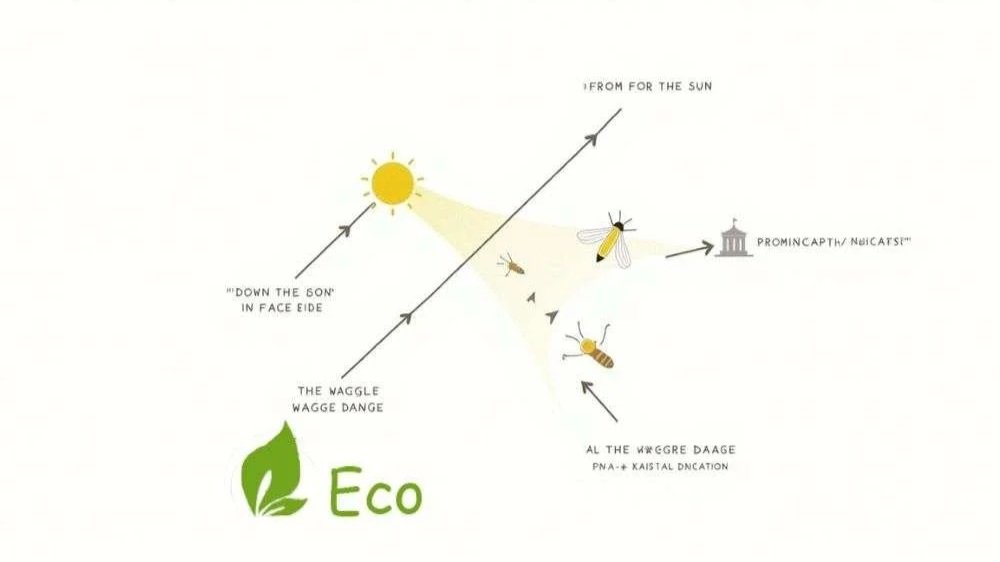
How bees use the waggle dance to navigate.
Backward
In circles
In loops
This teaches them the landmarks, smells, and layout of the environment.
Step 2: Visual and Scent Confirmation
On their way back, bees look for:
Familiar shapes
Hive scent
Pheromone trails
Guard bees at the entrance also release scent signals that help the colony gather.
Step 3: Final Approach
Once close, bees fly in a familiar zig-zag pattern that slowly narrows toward the hive entrance.
This prevents collisions and keeps the traffic organized.
5. What Happens When Bees Get Lost?
Even with advanced navigation, bees can become disoriented by:
Strong winds
Heavy rain
Extreme heat
Pesticides
Sudden changes in the landscape
Hive relocation without proper techniques
Lost bees usually try to follow familiar scents or landmarks to reorient themselves. If they cannot, they may enter another hive — a behavior called drifting. Unfortunately, this can lead to the spread of disease, which is why careful bee relocation is crucial.
6. How Climate and Environment Affect Bee Navigation
In modern times, bees face new obstacles that interfere with their homing ability:
Urban Structures
Glass buildings, reflective surfaces, and artificial lights confuse bees and distort their visual maps.
Pesticides
Certain chemical pesticides damage bees’ internal navigation systems. Even small exposures can disrupt memory, timing, or directional ability.
Temperature and Weather
Extreme heat — common in places like Florida — makes bees more stressed and less accurate during flight.
Habitat Loss
Fewer flowers, fewer landmarks, and fewer natural nesting sites all contribute to reduced bee navigation success.
This is why eco-friendly bee removal and habitat protection are becoming essential for preserving pollinators.
7. Why Navigation Knowledge Matters for Bee Removal Professionals
Professionals who practice live bee relocation must understand bee navigation to avoid colony separation.
A responsible bee removal expert will:
Move hives during evening hours
Seal old hive entrances
Use attractant scents to guide bees
Allow bees to reorient in their new environment
Ensure the queen is safely transferred
When done correctly, bees adapt quickly and rebuild their navigation map in their new home.
This protects both the bees and the surrounding environment.
8. How You Can Help Bees Stay Safe
You don’t need to be a scientist to protect local pollinators. Here’s what you can do:
Plant bee-friendly flowers
Avoid pesticide use
Install bee-safe water sources
Support local beekeepers
Call eco-friendly bee removal experts instead of exterminators
Educate others about pollinator importance
Small actions protect pollination, agriculture, and biodiversity.
Conclusion
Bees are far more intelligent and complex than most people realize. Their ability to navigate long distances, communicate through dances, and return home with pinpoint accuracy is a remarkable achievement of evolution.
Understanding bee navigation and homing behavior helps us appreciate these tiny creatures and the essential role they play in our environment. It also reminds us that protecting bees isn’t just a choice — it’s a responsibility.
If bees build a hive on your property, always choose live, eco-friendly removal. With the right approach, bees can be safely relocated and allowed to continue their critical work as pollinators.