
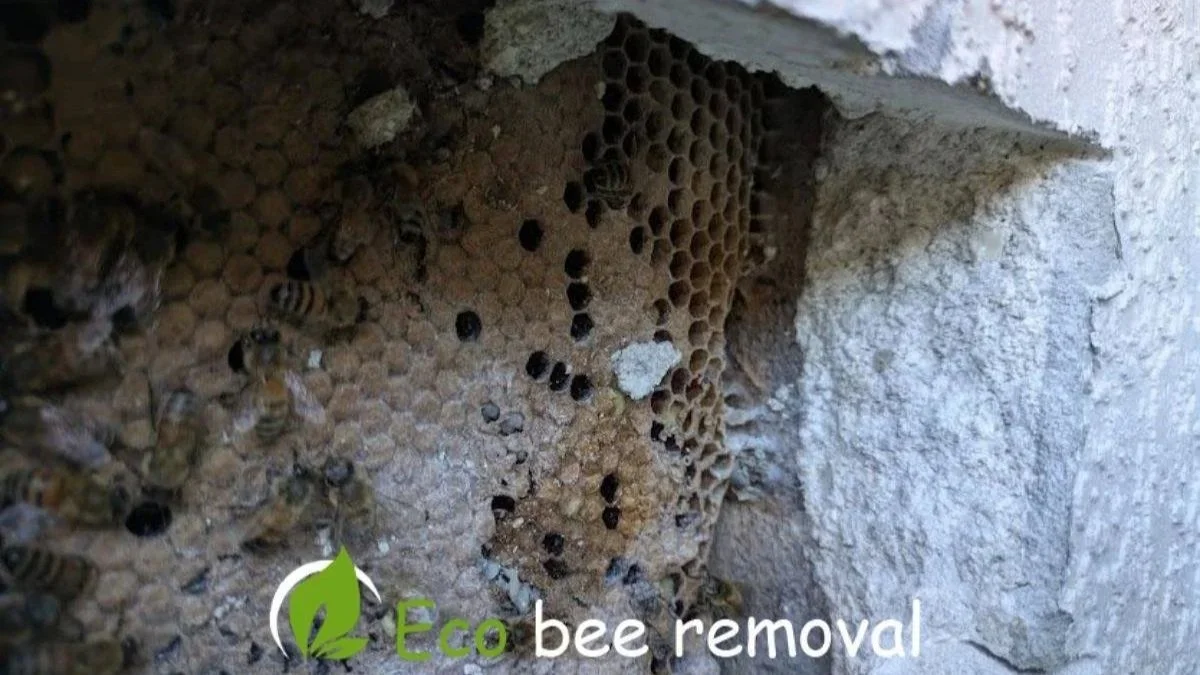
Bees removed from damaged stucco wall in Florida.
Florida homeowners are no strangers to buzzing visitors. From Miami to Tampa, bees frequently choose residential houses—especially stucco-coated homes—as their ideal nesting spots. But why do bees prefer stucco walls over natural trees or other structures?
The answer lies in Florida’s climate, construction style, warm micro-gaps, and the unique texture of stucco that provides bees with a perfect entry point and long-term shelter.
In this in-depth guide, we'll break down the science, the construction factors, and what every Florida homeowner should know to prevent unwanted bee colonies.
1. Florida’s Warm Climate Makes Stucco Walls Even More Attractive
Florida’s subtropical climate provides bees with everything they need: heat, moisture, and long flowering seasons. Stucco walls absorb heat during the day and release it slowly at night, creating a stable temperature inside the wall cavity.
Why this matters for bees:
Bees need warm, dry spaces to raise brood.
Warm walls help bees conserve energy.
A steady temperature protects developing larvae.
Florida’s stucco homes—especially older ones—act almost like an incubator. Even during cooler winter nights, bees inside walls remain comfortable and active.
This natural heating effect is one of the biggest reasons bees choose stucco walls over trees.
2. Stucco Is Softer in Florida’s Humid Climate—Making Entry Easier
Stucco is a strong material, but Florida’s humidity softens it over time.
How humidity weakens stucco:
Continuous moisture expands and contracts the surface.
Salt-rich coastal air erodes stucco faster.
Cracks form where stucco meets roofing, windows, vents, or fascia boards.
These cracks create perfect entry points for scout bees searching for their next hive location.
Bees don’t drill holes. They use openings that already exist. Florida’s softened stucco often has:
hairline cracks
unsealed gaps
Weakened patches around fixtures
gaps between stucco and wood trim
Once bees find a hole—even as small as a pencil—they can build a 40–80 lb hive inside the wall.
3. Stucco Walls Hide Perfect Hollow Spaces Behind Them
Many Florida homes are built with:
wood framing
insulation gaps
hollow cavities between studs
Behind the stucco layer is a spacious, protected environment. Bees love this setup because it mimics natural structures like:
tree hollows
rock crevices
protected cliff pockets
Wall cavities provide:
✔ Darkness
✔ Safety from predators
✔ Stable temperature
✔ Room for large colonies
✔ Dry interior conditions
A bee colony inside a wall can expand rapidly—some reach 50,000 bees or more within months.
4. Florida Construction Frequently Leaves Micro-Gaps Bees Can Use
Construction gaps are normal, but in Florida’s rapidly growing neighbourhoods, tiny flaws can make stucco homes more vulnerable.
Common entry points bees use:
Gaps between stucco and soffit
Cracks near rooflines
Holes around outdoor lights
Unsealed electrical lines
Spaces around AC penetrations
Cracked window corners
These are not defects—just normal wear and tear. But for honey bees, these are high-value real estate opportunities.
If scout bees find a gap, they perform a waggle dance back at the hive to tell other bees, “We found a great home!” Within hours, hundreds of bees can move in.
5. Stucco Retains Smells That Attract Future Colonies
This is a fact many homeowners never realise:
Bees can return to a home years after a dead or removed hive
If the scent was not cleaned properly.
Stucco is porous. It absorbs:
wax
honey
pheromones
brood smell
These scents linger inside the wall and attract future swarms.
This is one reason professional relocation—not extermination—is recommended. If a hive is killed but not removed, the honey melts and soaks into the structure. Stucco should be cleaned, sealed, and repaired to prevent return infestations.
6. Florida’s Stucco Homes Provide Natural Protection Against Predators
In the wild, bees face threats like:
ants
beetles
birds
small mammals
weather exposure
Stucco walls eliminate nearly all these risks.
A hive inside a wall:
stays dry
cannot be reached by predators
avoids heavy Florida rains
stays cooler than direct sunlight
protects the queen and brood
This level of protection is far greater than most natural nest sites.
7. Older Florida Homes Are More Vulnerable Due to Settling and Wear
Over time, houses settle and develop cracks—especially in humid regions like:
Miami
Naples
Fort Myers
Orlando
Tampa
Sarasota
Cape Coral
Older stucco tends to:
crumble at edges
separate from wood framing
weaken around rooflines
accumulate moisture
These cracks are perfect bee entry points and often go unnoticed until the colony becomes large.
8. Stucco Texture Mimics Natural Nesting Surfaces
While bees normally choose trees, the rough texture of stucco resembles bark-like surfaces.
This makes the wall easier for bees to land on and inspect. Scout bees prefer surfaces with texture that allows them to grip and investigate openings.
Smooth concrete walls don’t have this advantage—but stucco does.
9. Florida’s Ground-Level Landscaping Often Directs Bees Toward Walls
Many Florida homes have:
flowering bushes near walls
palm trees close to the house
blooming shrubs against stucco
hummingbird-attracting plants near the entrance
These plants attract bees for food, and the bees then explore nearby structures for shelter.
If flowers grow up against stucco, bees naturally investigate the wall for cavities.
10. How to Prevent Bees From Nesting Inside Stucco Walls
Since stucco is vulnerable to cracks and moisture, prevention is key.
✔ Seal gaps yearly
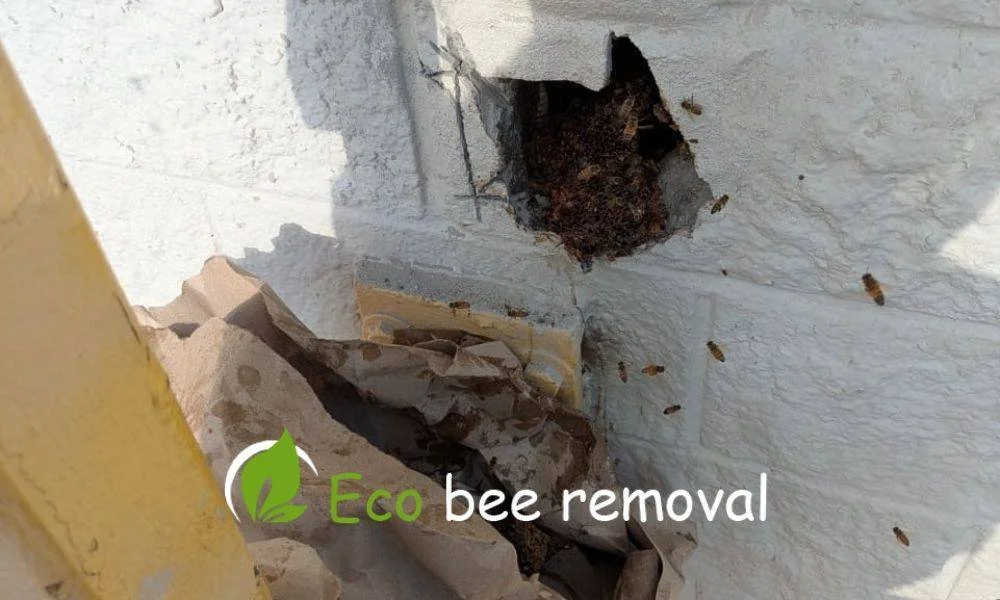
Bee hive found in stucco wall.
Use exterior-grade sealants to close:
window corners
roofline junctions
AC pipe entries
fascia board seams
✔ Repair damaged stucco immediately
Don’t delay repairs after:
hurricanes
storms
wood rot
impact damage
✔ Reduce flower density near walls
Keep blooming plants at least 2–3 feet from the home.
✔ Install bee-proof mesh
Especially around:
vents
soffits
chimney openings
roof edges
✔ Schedule yearly home inspections
Professional bee removal companies often identify entry points early.
11. Why Live Bee Removal Is Essential in Florida
Killing bees inside a stucco wall never solves the problem. It creates more issues:
When bees are killed:
honey melts
wax collapses
honey leaks into the walls
mold grows
ants and roaches invade
smell attracts new swarms
Professional live bee relocation removes:
the entire colony
all honeycomb
pheromone scent
wax residue
This prevents future reinfestation while saving Florida’s essential pollinators.
12. Final Thoughts: Stucco Walls Are a Beacon for Bees in Florida
Bees choosing stucco walls isn't random—it’s a combination of:
Florida’s humidity
softer stucco texture
construction gaps
warm wall cavities
protection from the environment
leftover scents from old hives
Florida homes give bees everything they naturally search for. Understanding this helps homeowners prevent bee invasions and protect their property.
If you notice bees entering a crack, hole, or corner of your stucco exterior—even a small one—contact a professional quickly. Early removal prevents major damage and ensures bees are relocated humanely.