
Can Bees Damage Insulation Inside Your Attic?
Discovering bees around your roof or attic can be concerning, especially when you suspect they may have built a colony inside your home. A few bees flying near a roof vent may not seem like a serious problem, but repeated activity around the same opening could signal a hidden honey bee colony.
For Florida homeowners, attic spaces can provide sheltered nesting locations when bees find a suitable entrance. Once a colony becomes established, the concern goes beyond the presence of bees. Honeycomb, leaking honey, moisture, and the removal process itself can affect nearby insulation and other building materials.
So, can bees damage insulation inside your attic? Yes, an established bee colony can contribute to insulation problems, although honey bees do not eat insulation or typically destroy it directly. The extent of the damage depends on where the colony is located, how long it has been there, and whether honeycomb or honey has affected the surrounding materials.
Understanding the warning signs can help you protect your property and determine when professional bee removal is necessary.
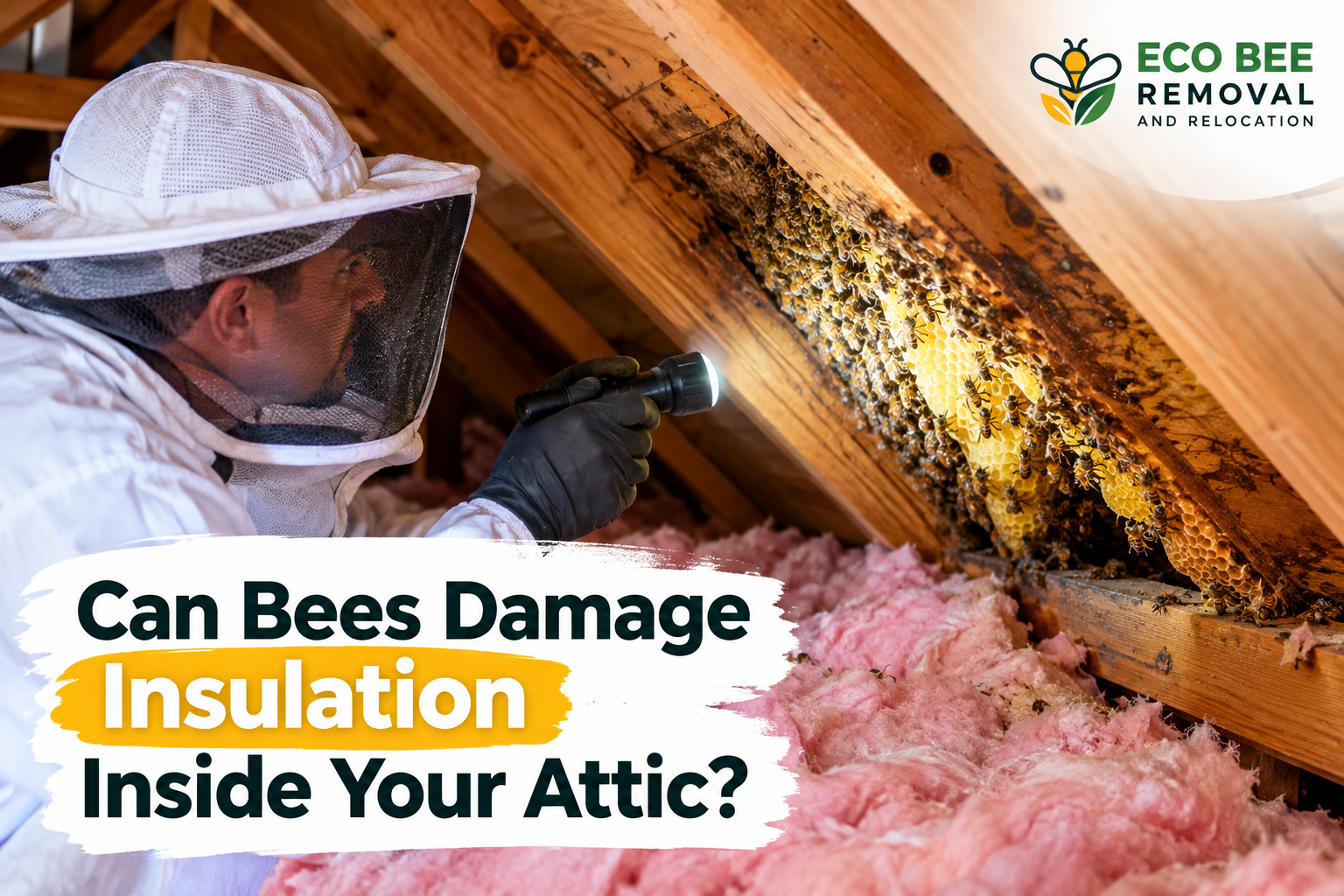
Can Bees Damage Insulation Inside Your Attic.
How Do Bees Get Inside Your Attic?
Honey bees usually enter an attic through small openings that connect the exterior of a house to a sheltered cavity. These openings may be difficult to notice from the ground.
Common entry points include:
Gaps beneath roof edges and soffits
Openings around roof vents and ventilation screens
Cracks near fascia boards
Gaps around pipes, cables, and other roof penetrations
Damaged roofing materials or openings around exterior joints
In Florida, warm weather can support bee activity during much of the year, although activity varies with seasonal conditions, weather, and the availability of food.
Once bees discover a suitable opening, a colony may establish itself in an accessible roof cavity or another protected space. Attics can offer shelter from rain and direct exposure, making them attractive nesting locations when the conditions are suitable.
However, bees flying around a roof do not automatically mean a colony is living inside the attic. A professional inspection can help determine whether the bees are nesting in the structure or simply visiting the area.
1. How Can a Bee Colony Affect Attic Insulation?
Attic insulation helps regulate indoor temperatures by slowing heat transfer between the living space and the roof. Fiberglass, cellulose, and other insulation materials serve different purposes, but all need to remain in suitable condition to perform effectively.
Honey bees do not feed on insulation. The potential damage comes from the colony's location, the materials associated with the hive, and the work required to remove it.
Honeycomb and Leaking Honey
An established honey bee colony builds wax comb to raise brood and store honey. If the comb is attached to roofing materials, wooden framing, or surfaces near insulation, accumulated honey may leak or seep into surrounding materials.
Honey contamination can cause staining, odors, and cleanup problems. Depending on the amount of honey and the materials affected, nearby insulation may need to be inspected and possibly replaced.
Disturbed or Compressed Insulation
Insulation may be displaced during access and removal work, particularly when the colony is located beneath roofing materials or behind an insulated section of the attic.
This does not mean every bee removal requires insulation replacement. A professional should assess the affected area and determine whether the material can remain in place or needs attention.
Moisture and Secondary Problems
Honey and other hive debris can create localized contamination. If moisture is also present because of a roof leak or another building issue, insulation may deteriorate or lose some of its effectiveness.
It is important to identify the actual source of moisture rather than assume bees are responsible for every attic insulation problem.
2. Warning Signs of Bees Living Near Attic Insulation
A hidden colony may not be visible from the living area of your home. Instead, you may notice changes in bee activity around the roof or attic.
Look for these potential warning signs:
Repeated bee traffic: Bees consistently entering and leaving a particular roof opening may indicate an established nesting site.
Buzzing near the ceiling: Persistent buzzing may sometimes be audible near an active colony, although sounds can travel through building materials and are not conclusive evidence.
Bees around attic vents: Increased activity near a vent, soffit, or roof edge may indicate that bees are using an opening to reach a protected cavity.
Unusual stains or odors: Sticky residue, discoloration, or a sweet smell near an accessible area may warrant further investigation. These signs can have other causes, so they should not be treated as proof of a bee colony.
Visible wax or hive material: Honeycomb or wax discovered during a legitimate inspection provides stronger evidence that a colony has occupied the space.
Do not reach into insulation or disturb a suspected nest to confirm what is happening. An active colony can contain many defensive bees, and attic spaces may have exposed wiring, unstable footing, and limited ventilation.
3. Can Damaged Insulation Increase Your Energy Bills?
Damaged, displaced, compressed, or moisture-affected insulation can reduce its ability to help regulate indoor temperatures. Depending on the location and severity of the problem, your heating and cooling system may need to work harder to maintain a comfortable environment.
Florida homeowners rely heavily on air conditioning, particularly during hot and humid weather. This makes maintaining the attic insulation and addressing air leaks important parts of home maintenance.
However, higher energy bills alone do not indicate a bee problem. Poor attic ventilation, duct leaks, roof issues, air leakage, and aging insulation can also contribute to increased energy use.
If you suspect a colony near your insulation, have the situation assessed before arranging insulation repairs. Removing or replacing insulation without addressing an active colony may leave the underlying problem unresolved.
4. Why Professional Bee Removal Matters
Attempting to remove an established colony without the right experience can create additional risks. Disturbing the entrance, spraying chemicals, or sealing the opening while bees remain inside may complicate the situation.
A professional bee removal specialist can evaluate the bee activity, identify likely entry points, and determine the safest practical way to access the colony.
Depending on the structure, an inspection may involve examining the roofline, soffits, accessible attic areas, and suspected nesting cavities. Specialized inspection tools may be useful when the colony is hidden behind building materials.
The removal plan should account for both the bees and the hive itself. Simply eliminating or dispersing visible bees may leave honeycomb and stored honey inside the structure.
Where feasible, live bee removal and relocation can provide an alternative to extermination. The method used depends on the colony's location, accessibility, condition, and other site-specific factors.
At Eco Bee Removal, we focus on professional bee removal and live relocation when feasible, while considering the property's condition and the work required to address the colony.
5. What Happens to Attic Insulation After Bee Removal?
Once the colony has been removed, the affected attic area should be evaluated to determine whether additional cleanup or repairs are necessary.
The appropriate steps depend on what the inspection reveals.
Inspect the affected area: Look for remaining honeycomb, honey residue, and any visibly contaminated materials.
Assess the insulation: Determine whether it is dry, intact, and still suitable for use.
Address affected materials: Insulation that is heavily contaminated, wet, or no longer functional may require professional removal and replacement.
Check for entry points: Identify the opening the bees used and determine when it can be properly sealed.
Arrange necessary repairs: Address damaged roofing materials, vents, soffits, or other structural openings that allowed access.
Not every colony causes significant insulation damage, and not every attic requires extensive repairs. A careful assessment helps avoid unnecessary replacement while ensuring that affected materials receive appropriate attention.
The original entry point should be sealed only after the colony has been properly addressed. Otherwise, bees may become trapped or seek another route into the building.
6. How Florida Homeowners Can Help Prevent Future Bee Problems
Although it is not possible to prevent every bee swarm or nesting attempt, routine property maintenance can reduce opportunities for bees to enter unwanted spaces.
Consider these preventive measures:
Inspect roof edges, soffits, fascia boards, and exterior joints periodically.
Repair damaged vent screens and other openings where appropriate.
Check for gaps around utility penetrations.
Address roof leaks and moisture problems promptly.
Arrange a professional assessment when bees repeatedly use the same entrance.
Do not seal an opening while bees may still be nesting inside. Confirm that the colony has been addressed before completing the repair.
If you notice recurring bee activity around your attic, early professional advice can help you understand the situation before deciding whether removal, cleanup, or insulation repairs are needed.
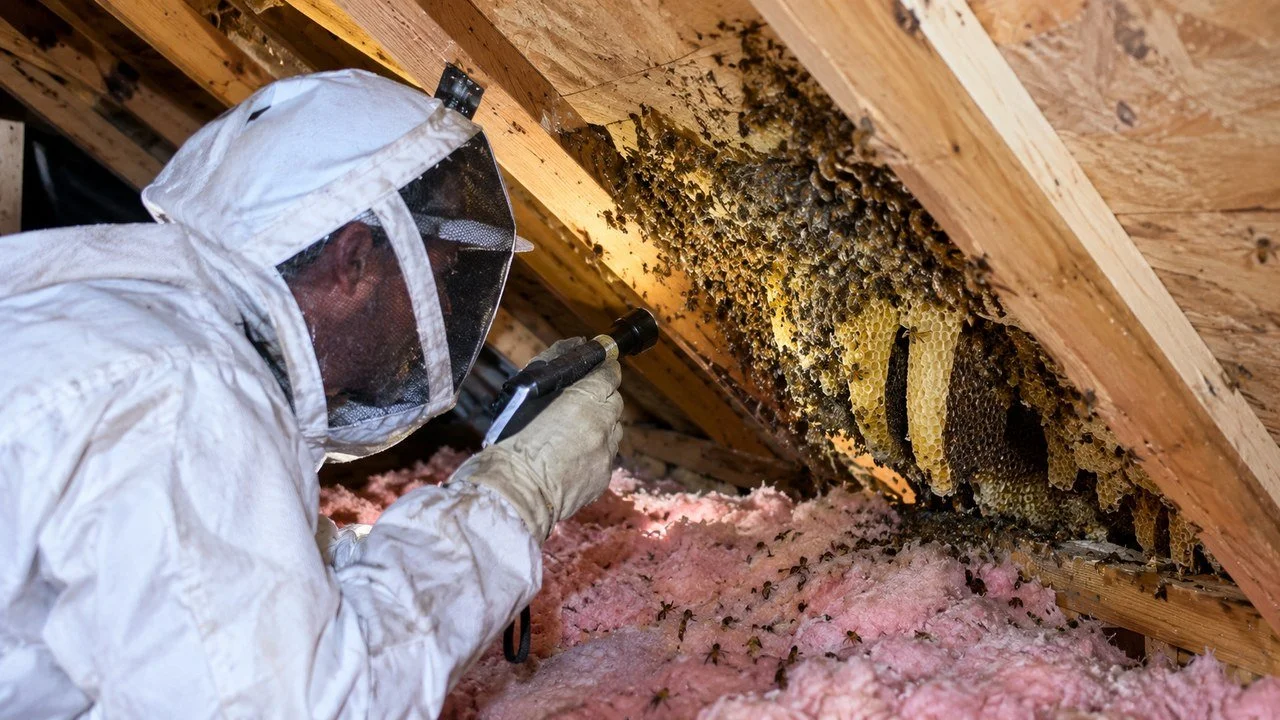
Honey Bee Colony Found Near Attic Insulation.
Frequently Asked Questions
Can bees ruin attic insulation?
An established colony can contribute to insulation damage if honey leaks onto the material or removal work disturbs it. Bees do not eat insulation, and the extent of damage depends on the specific conditions.
Do bees build nests in attic insulation?
Honey bees typically build wax comb within a suitable cavity or protected space. The comb may be located near insulation or attached to surrounding structural materials, but insulation itself is not their food source.
Should I replace insulation after bee removal?
Not necessarily. Insulation that remains clean, dry, intact, and functional may not need replacement. A qualified professional should assess any material affected by honey, moisture, or removal work.
How do I know if bees are inside my attic?
Repeated bee traffic around a roof opening, persistent buzzing near a suspected nesting area, and visible hive material may indicate a colony. An inspection is the most reliable way to assess the situation.
Can honey bees be removed and relocated in Florida?
Live bee relocation may be possible when the colony's location and condition allow it. A professional bee removal specialist can assess the site and explain the available options.
Protect Your Attic with Professional Bee Removal
Bees inside an attic can create more than a temporary nuisance. An established colony may leave honeycomb, cause localized contamination, and complicate insulation maintenance if the hive is not properly addressed.
The good news is that insulation damage is not inevitable. Identifying the problem, removing the colony appropriately, and inspecting the affected area can help homeowners make informed decisions about necessary repairs.
If you have noticed bees entering your attic, roof vents, or soffits, Eco Bee Removal can help you understand your bee removal options.
Eco Bee Removal focuses on professional, eco-friendly bee removal and live relocation whenever feasible, serving homeowners and property owners across its Florida service areas.
Visit www.ecobeeremoval.com or call (888) 282-1886 to discuss your bee removal needs.
Protect your home, address hidden colonies responsibly, and give honey bees the opportunity for safe relocation when conditions allow.