
Professional Methods for Finding Bees in Closed Walls.
Finding bees inside a closed wall can be confusing for homeowners. You may notice a few bees entering through a tiny gap in the exterior of your house, but there may be a much larger colony hidden behind the wall. Because the inside of the wall is not visible, determining the colony's exact location requires careful observation and professional assessment.
In Florida, honey bees can establish colonies inside wall cavities, concrete block walls, stucco exteriors, soffits, and other protected spaces. Warm weather can provide favorable conditions for colony activity throughout much of the year. However, identifying a hidden bee colony is not simply a matter of following the bees. Professionals must understand bee behavior, building construction, and the safest way to locate the colony without causing unnecessary damage.
At Eco Bee Removal, the focus is on professional bee removal and live relocation whenever feasible. Understanding how specialists investigate hidden colonies can help homeowners recognize the warning signs and make informed decisions about protecting their property.
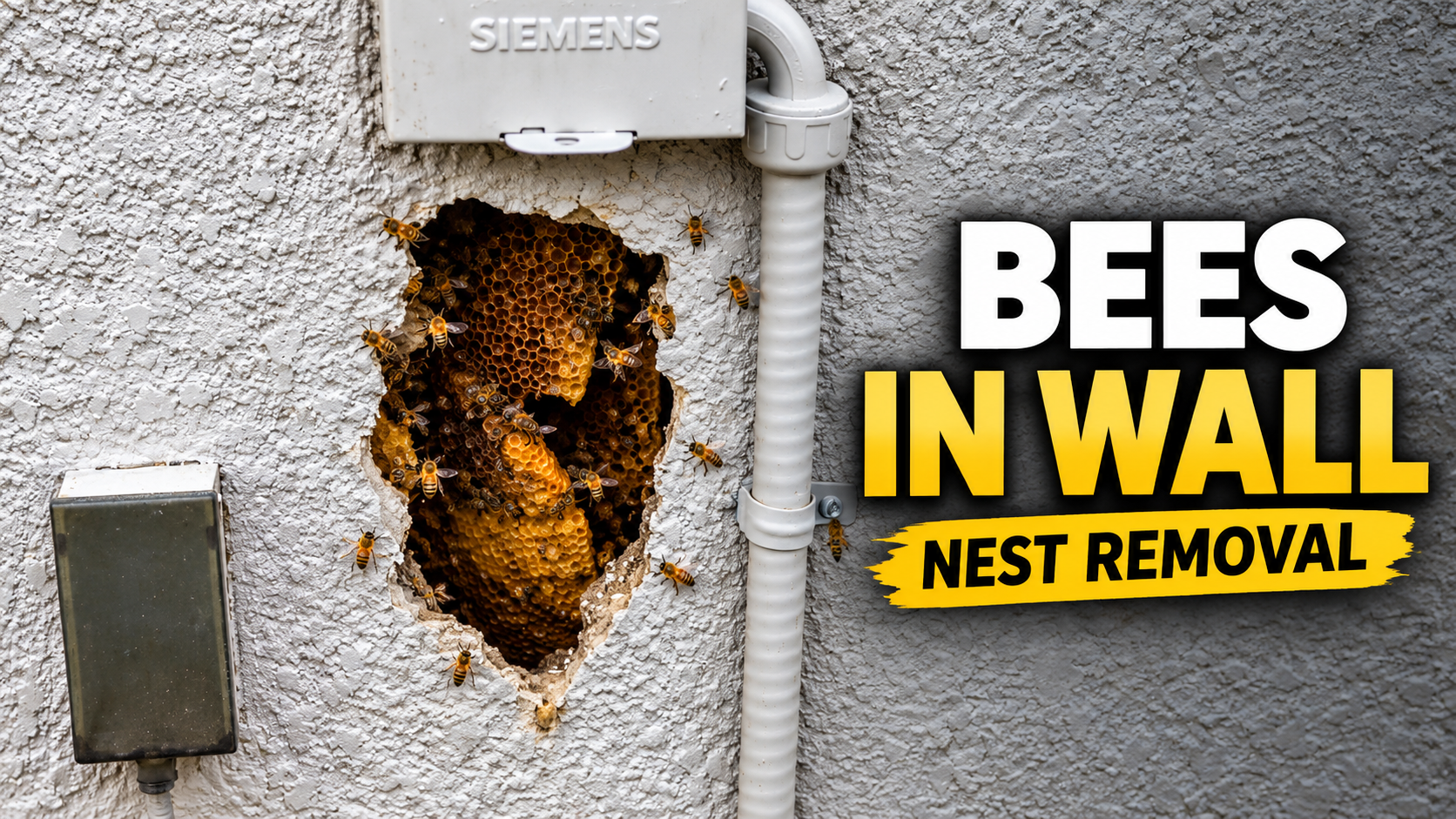
Bees Nest Inside Wall Removal | Honeycomb Removal
How Can You Tell If Bees Are Living Inside a Wall?
A hidden colony often leaves several clues before anyone sees the hive itself. Recognizing these signs can help you decide when you need a professional inspection.
Common signs of bees inside a wall include:
Repeated bee activity: Bees consistently enter and exit through the same small opening.
Increased daytime activity: Worker bees may become more noticeable as they leave to collect nectar, pollen, and water.
Buzzing sounds: A faint, continuous buzzing may sometimes be audible near an active colony, although wall materials can make this difficult to detect.
Honey or wax stains: Yellowish or brown marks near an opening may indicate leaking honey or other hive-related material, but stains alone do not confirm a colony.
A growing number of bees: Increasing traffic around one entrance may suggest an established colony rather than a few occasional visitors.
Not every group of bees indicates a permanent hive. A swarm may temporarily gather on a structure before moving elsewhere. Professionals consider the pattern of activity, the location, and other evidence before determining whether a colony is established inside the wall.
1. Observing Where the Bees Enter and Exit
One of the first steps in professional bee colony detection is observing the bees from a safe distance.
Rather than immediately opening the wall, a bee removal specialist watches where the bees travel and identifies the entrance they use most frequently. This may be a narrow crack in stucco, a gap beneath siding, a small opening around a utility penetration, or an exposed section of a concrete block wall.
Repeated flight patterns can help reveal the likely location of the colony. For example, if bees consistently disappear into the same opening and return carrying pollen, that activity provides useful evidence of an active nest nearby.
Professionals also assess the amount and consistency of bee traffic. These observations help distinguish a potentially established colony from temporary swarm activity or bees visiting another location.
Why it matters: Identifying the correct entrance helps narrow the inspection area and reduces the likelihood of disturbing the colony unnecessarily.
2. Inspecting the Wall and Surrounding Structure
Once the entrance has been identified, professionals examine the surrounding building materials.
The type of construction can provide important clues about where a colony may be located. In Florida homes, bees may enter spaces behind stucco, within hollow concrete blocks, beneath exterior siding, or through gaps connected to soffits and rooflines.
A specialist may inspect:
Cracks, gaps, and openings in the exterior wall.
Joints between siding, stucco, and other materials.
Areas around pipes, vents, cables, and utility lines.
Connections between walls, soffits, and roof structures.
Previous repairs or openings that may provide access to a wall cavity.
The goal is to understand how bees could have entered the structure and which hidden spaces might provide enough room for a colony.
A visible entrance does not always sit directly in front of the hive. Bees may travel through interconnected cavities before reaching the outside. For this reason, professionals evaluate the building's layout instead of assuming the colony is immediately behind the opening.
3. Using Bee Behavior to Estimate the Colony's Location
Bee behavior provides valuable information during an inspection. Professionals observe flight direction, entrance activity, and how consistently the bees use a particular opening.
Worker bees regularly travel between the colony and nearby food and water sources. Their repeated movements can help identify the primary entrance and establish whether activity is concentrated in one area.
Specialists may also observe the site at different times of day because bee activity changes with weather, sunlight, and foraging conditions. A quiet period does not necessarily mean the colony has disappeared.
However, flight patterns cannot reveal the exact size or depth of a hidden hive on their own. They are one part of a broader assessment that combines visible evidence, building construction, and appropriate inspection methods.
4. Using Professional Tools to Investigate Hidden Spaces.
When visual inspection is not enough, a bee removal professional may use additional tools to investigate the wall cavity.
Depending on the structure and accessibility, these may include a flashlight, inspection mirror, borescope, or small inspection camera. A borescope can sometimes provide a view inside a cavity through a suitable existing opening or a carefully planned access point.
This approach may help a specialist identify comb, bees, or other evidence without immediately creating a large opening in the wall.
Thermal imaging may also be considered in suitable circumstances. An active colony can produce localized heat, but temperature differences are not definitive proof of a hive. Sunlight, insulation, electrical equipment, and other building conditions can affect thermal readings.
No single tool works in every situation. The most appropriate inspection method depends on the wall material, the suspected colony location, the available access, and the evidence collected during the initial assessment.
5. Determining Whether Limited Wall Access Is Necessary.
Sometimes, professionals can gather enough information to plan the next step without opening the wall. In other cases, a hidden colony cannot be accurately assessed from the outside.
If access is necessary, the specialist evaluates where an opening would provide the most useful view while minimizing unnecessary disruption. The location and size of the opening depend on the construction, the colony's suspected position, and the work required for safe removal.
Opening a wall without understanding the colony's location can create avoidable problems. Bees may enter other parts of the building, and hidden honeycomb may remain behind after the visible bees are removed.
A professional assessment helps determine whether limited access is appropriate and whether a qualified contractor may be needed for structural repairs.
Homeowners should avoid cutting into walls themselves, especially when electrical wiring, plumbing, insulation, or an active colony may be present.
6. Confirming the Colony and Planning Live Bee Removal
Locating bee activity is only part of the process. Before beginning removal, professionals need to assess the colony, its accessibility, and the conditions surrounding the nest.
When the colony is accessible and circumstances permit, live bee removal may involve carefully recovering the bees and removing the honeycomb. The exact procedure depends on the colony's location and the construction of the wall.
Removing only the visible bees may not solve the underlying problem. Honeycomb and honey left inside a cavity can attract other pests, create odors, and potentially cause staining or material damage. The extent of these risks depends on the amount of comb, the condition of the cavity, and whether the remaining material can be properly addressed.
After removal, the affected area should be evaluated to determine whether cleanup, repairs, or sealing the original entry point is appropriate. The entrance should be sealed only after the colony has been properly addressed; blocking an active entrance can trap bees inside or redirect their movement into the building.
At Eco Bee Removal, the objective is to approach bee removal responsibly, with an emphasis on protecting property and arranging live relocation when feasible.
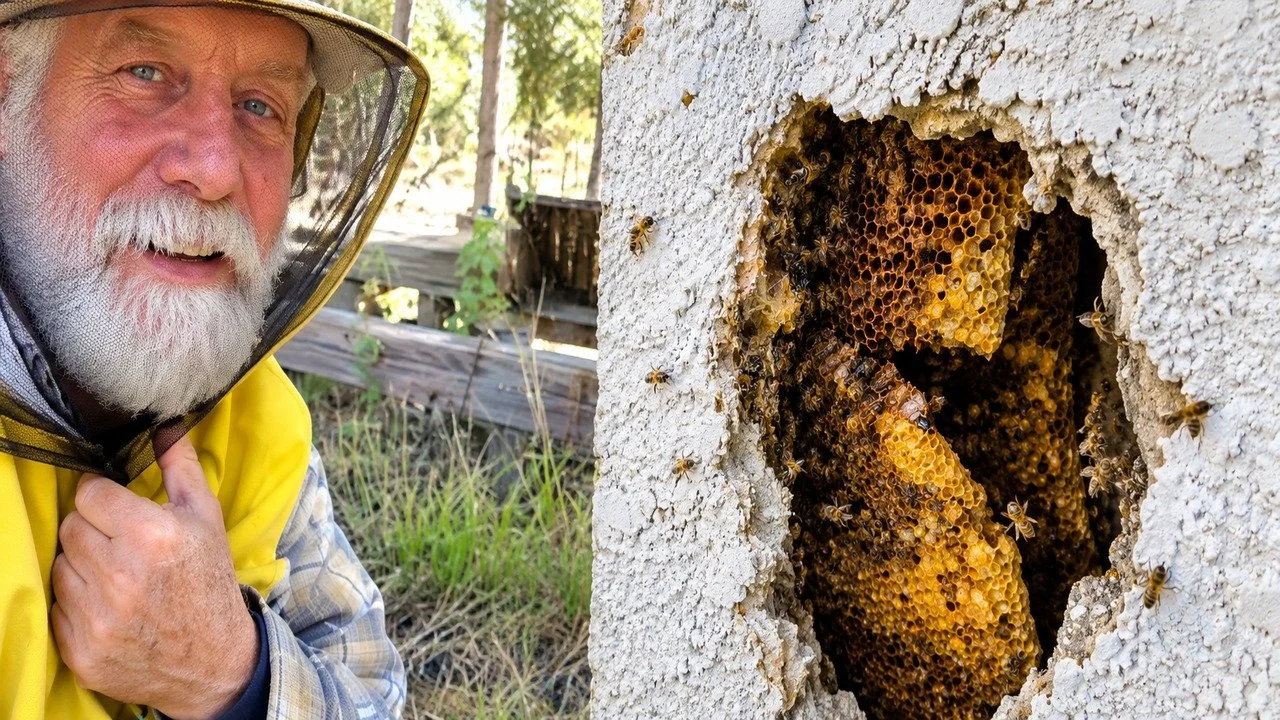
Bees Nest Removal from Wall | Honeycomb Removal
Why Professional Bee Removal Matters in Florida
Florida homeowners may encounter hidden honey bee colonies in residential walls, commercial buildings, and other structures. The combination of warm conditions and available nesting spaces means that unexplained bee activity should not be ignored.
Attempting to handle an established colony without the right experience can expose people to stings and may complicate the removal process. In addition, disturbing a colony without a clear plan can make it more difficult to locate the nest and address the remaining honeycomb.
Professional bee removal specialists can evaluate the situation, explain the available options, and determine an appropriate course of action for the specific building.
If bees are entering a wall in Miami, Fort Lauderdale, Boca Raton, Cape Coral, Fort Myers, Sarasota, or another Florida community, seek a qualified local bee removal professional who can assess the site and explain whether live removal and relocation are feasible.
Frequently Asked Questions
How do professionals find bees inside a closed wall?
They observe bee flight patterns, identify the entrance, inspect the surrounding building materials, and use appropriate tools when needed. If the colony cannot be confirmed externally, a carefully planned inspection opening may be necessary.
Can bees live inside a concrete block wall?
Yes. Honey bees may establish colonies in suitable cavities within concrete block walls and connected structural spaces. The exact location depends on the building's construction and the available entry points.
Can professionals remove bees without damaging the wall?
Sometimes. The amount of access required depends on where the colony is located and whether the hive can be reached through an existing opening. Some situations require limited wall access to remove the colony and honeycomb properly.
Should I seal the opening where bees enter?
Not while the colony may still be active. Sealing an entrance prematurely can trap bees inside or cause them to seek another route into the building. Have the situation assessed before making changes.
Is live bee relocation always possible?
No. Relocation depends on the colony's location, accessibility, condition, and other site-specific factors. A qualified professional can explain the realistic options after inspecting the property.
Contact Eco Bee Removal for Professional Bee Removal and Relocation
If you see bees repeatedly entering a small opening in your wall, do not assume the problem is limited to the few bees visible outside. An established colony may be hidden within the structure, where early assessment can help you understand the work involved.
Eco Bee Removal provides professional bee removal services in Florida, with a focus on eco-friendly methods and live bee relocation whenever feasible. Whether bees are entering a concrete block wall, stucco exterior, soffit, or another part of your property, a professional inspection can help determine the next step.
Visit https://www.ecobeeremoval.com/ or call (888) 282-1886 to discuss your bee removal needs.
Protect your property while giving honey bees the opportunity for safe relocation when conditions allow.