
How Bees Use Vibration to Communicate Inside Dark Spaces.
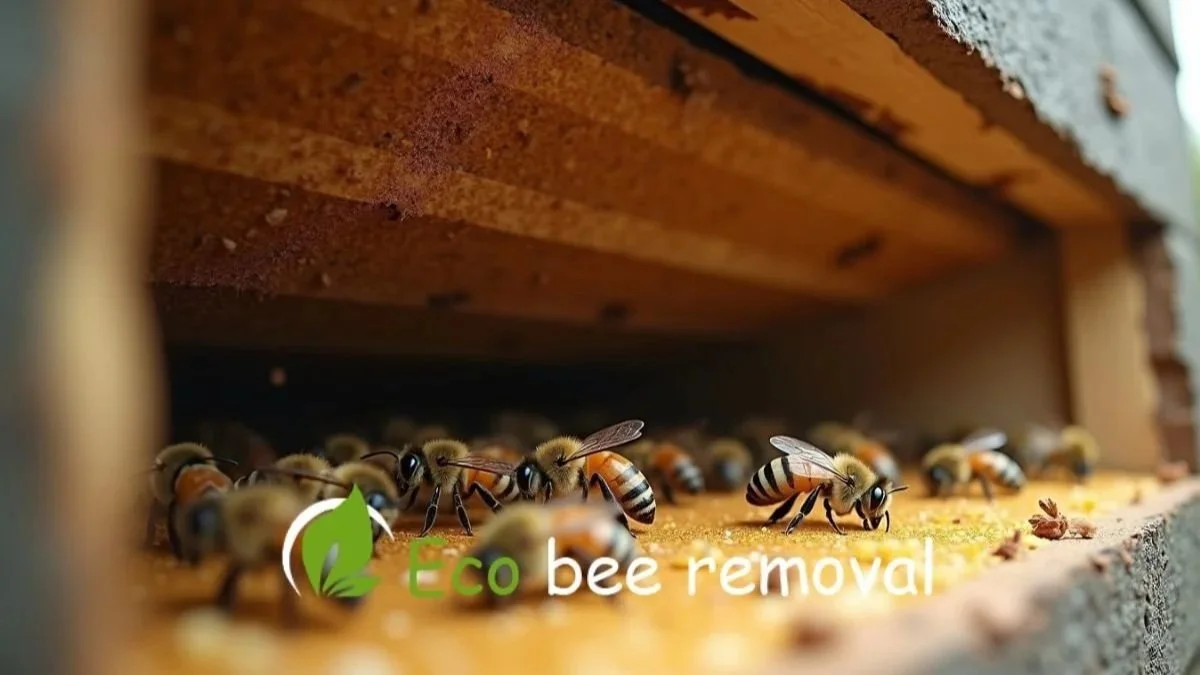
Honey bees nesting under a house, safely handled by eco-friendly bee removal specialists.
Most people imagine bees communicating through dancing in bright sunlight or buzzing around flowers. While that’s partly true, it tells only half the story. Inside a beehive—or worse, inside your walls, attic, or soffits—bees live in complete darkness. Yet, they still communicate with remarkable accuracy.
So how do bees “talk” when there’s no light?
The answer lies in vibration-based communication, one of the most fascinating and least understood aspects of honeybee behavior. Bees rely heavily on vibrations, touch, and subtle body movements to send messages that keep their colony alive and organized—even in pitch-black environments.
This article explores how bees use vibration to communicate, why it matters, and what homeowners should understand when bees are living inside dark spaces.
Life Inside the Darkness of a Beehive
A natural honeybee hive is dark, crowded, and constantly active. Whether the colony lives inside a tree hollow or inside a home wall cavity, light rarely enters the space. Vision becomes almost useless.
Instead of relying on sight, bees evolved to depend on:
Vibrations
Touch
Sound waves
Air movement
These signals travel efficiently through wax comb, wood, and even drywall—making vibration the perfect communication tool.
Why Vibration Is So Important to Bees
Vibrations travel faster and farther in tight spaces than sound or light. Bees can:
Feel vibrations through their legs
Detect frequency changes
Understand direction and urgency
This allows them to communicate precise information without ever having to see each other.
Inside dark spaces like walls or attics, vibration becomes the colony’s primary language.
The Famous Waggle Dance—More Than a Dance
Most people have heard of the waggle dance, but few understand how it works in total darkness.
Inside the hive:
The dancing bee vibrates her body
Other bees feel the movement through the comb
The angle and rhythm communicate direction
The duration communicates distance
There is no visual observation happening. Worker bees read the message entirely through vibration patterns and physical contact.
This is one of the clearest examples of how bees communicate without the aid of light.
Vibration Signals Beyond the Waggle Dance
Bees use several vibration-based signals inside dark spaces. Each one serves a different purpose.
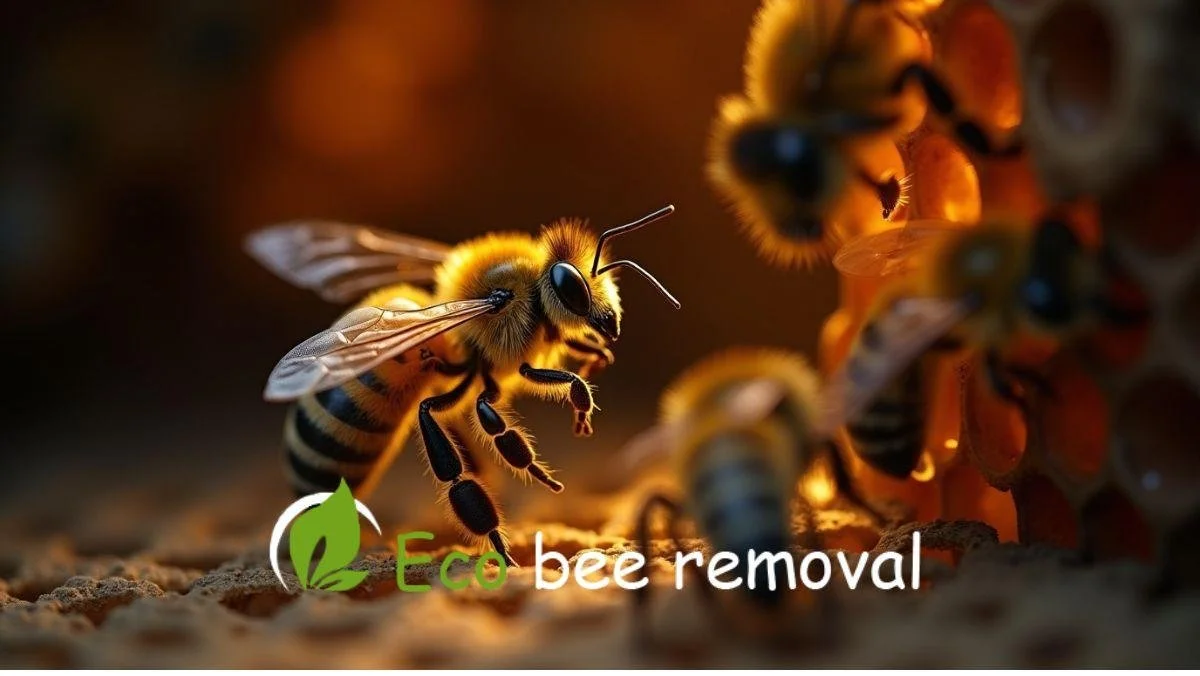
Eco-friendly live bee removal in action.
1. The Tremble Dance
Used when nectar processing is slow
Signals the need for more worker bees
Communicated through rapid body vibrations
2. Stop Signals
Short vibration bursts sent to halt risky behavior
Often used during threats or overcrowding
Felt instantly by nearby bees
3. Queen Piping Vibrations
Queens vibrate before swarming
Workers respond by preparing the colony
Critical during reproduction events
These signals help the hive stay organized, safe, and productive—even in chaos.
How Bees Detect Vibrations So Precisely
Bees are biologically designed to sense vibrations.
They use:
Subgenual organs in their legs
Antennae sensitive to air movement
Body hairs that detect motion
Even the smallest vibration inside a hive can trigger a response. This sensitivity explains why bees react strongly to drilling, knocking, or wall vibrations in homes.
What Happens When Bees Live Inside Walls or Attics
When bees nest inside a building, they use the same vibration communication system.
Wall cavities act like amplifiers:
Vibrations travel through studs and drywall
The colony becomes highly responsive
Loud noises can trigger defensive behavior
This is why improper removal methods—cutting, hammering, or spraying—can cause bees to become aggressive.
Understanding vibration communication is crucial for safe, eco-friendly bee removal.
Why DIY Bee Removal Often Fails
Many homeowners unintentionally disturb bees by:
Pounding walls
Blocking entrances
Using loud tools
To bees, these actions send alarm vibrations throughout the colony. Workers immediately interpret this as a threat and prepare to defend.
Professional bee removal experts understand:
How vibration affects bee behavior
How to minimize colony stress
How to relocate bees without panic
Vibration Communication Helps Colonies Survive
Vibration-based communication allows bees to:
Respond instantly to danger
Coordinate food collection
Protect the queen
Control hive temperature
Prepare for swarming
Without this system, honeybee colonies would collapse. It’s a survival mechanism refined over millions of years.
Why This Matters for Eco-Friendly Bee Removal
Understanding how bees communicate inside dark spaces allows professionals to:
Remove bees safely
Prevent colony collapse
Protect pollinators
Avoid unnecessary killing
Live bee relocation works because it respects bee behavior, not because it forces bees out.
Bees Are Not Silent—They’re Vibrational
Even when you can’t hear or see them, bees are constantly “talking” through vibrations. Inside walls, attics, and tree hollows, these signals guide every movement of the colony.
Recognizing this invisible language helps homeowners:
Understand why bees behave the way they do
Avoid dangerous mistakes
Choose ethical, effective removal solutions
Final Thoughts
Bees don’t need light to communicate. Through vibrations, they share complex messages that control the entire hive. This hidden language explains why bees thrive in dark spaces—and why human interaction must be handled with care.
If bees are active inside your home, remember:
They are not random.
They are not confused.
They are communicating—constantly.
Understanding that communication is the first step toward safe, responsible, and eco-friendly bee removal.