
Tools and Techniques Used in Professional Bee Relocation.
When unwanted bees end up inside a home, wall, roof, or tree, many people assume the only solution is extermination. But that’s no longer true—professional bee relocation has become the gold standard in Florida and across the country.
Eco-friendly bee removal protects pollinators, prevents structural damage, and ensures the colony survives in a safe new home. But what exactly happens during a live relocation? And what tools do professionals use to safely capture, transport, and rehome thousands of bees?
In this guide, we’ll break down the essential tools, equipment, and techniques used by trained bee removal experts. Whether you’re a homeowner curious about the process or a bee lover who wants to learn more, this article gives you an inside look at how real professionals get the job done.
Why Professional Bee Relocation Matters
Bees play a crucial role in pollinating our crops, flowers, fruits, and ecosystems. Unfortunately, when hives form too close to homes, they pose risks such as:
Structural damage to walls, attics, or soffits
Increased bee activity around children or pets
Honey leaks and stains
Aggressive behavior when the colony is disturbed
Professional bee relocation solves all this safely—without harming the bees. Instead of exterminating them, experts use specialized tools and methods to remove the colony alive and relocate it to a safe, managed apiary.
Tools Used in Professional Bee Relocation

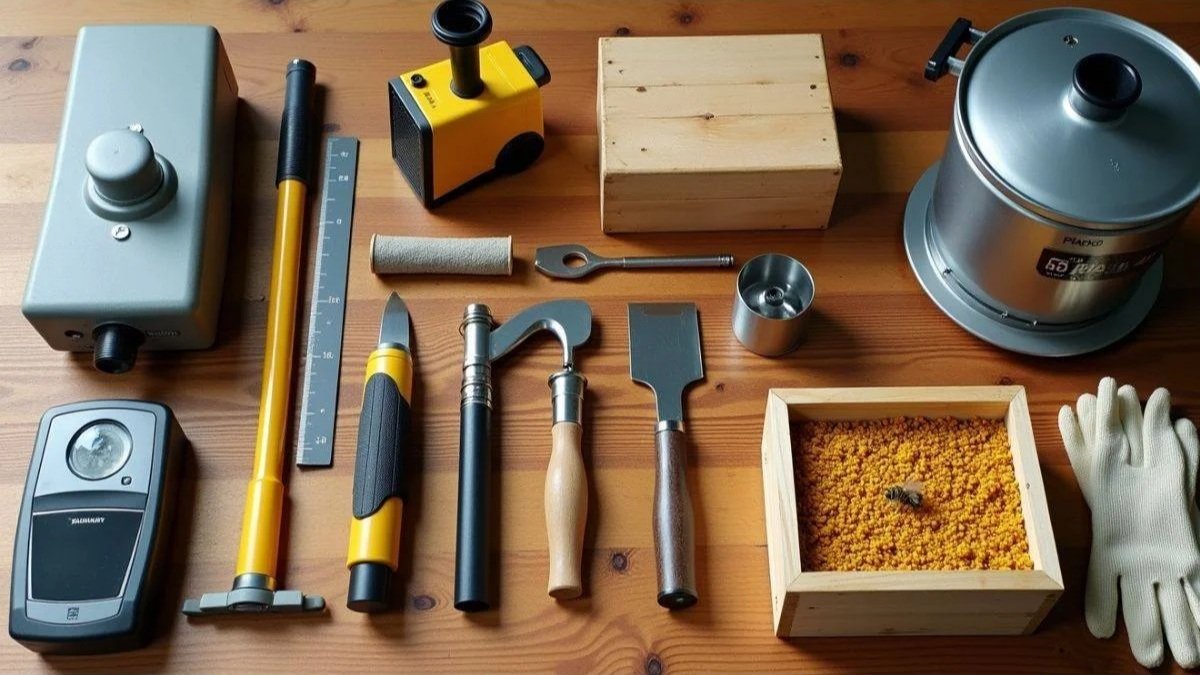
Professional bee removal tools and equipment used for safe live bee relocation at Eco Bee Removal in Florida.
1. Bee Suits and Protective Gear
Every bee tech begins with proper protection. A standard setup includes:
Full-body bee suit
Veil and protective hood
Thick gloves
Reinforced boots
Modern bee suits are lightweight and breathable, allowing professionals to maintain full mobility without risking stings. This makes it easier to work inside tight areas like walls, attics, and crawl spaces.
2. Smokers (Bee Calmers)
The bee smoker is one of the oldest and most important tools in beekeeping. It releases cool smoke that:
Calms the bees
Reduces defensive behavior
Helps prevent stings
Makes the colony easier to relocate
Professionals use clean, natural fuels like pine needles, burlap, or untreated wood chips.
3. Bee Vacuum (Live Bee Collection System)
A bee vacuum is NOT a regular household vacuum—it’s a gentle, custom-built system designed specifically for live relocation.
It safely collects bees without harming their wings or bodies. A bee vacuum includes:
Low-suction system
Padded interior container
Ventilation screen
Transfer box for easy apiary relocation
This tool allows professionals to gather thousands of bees quickly while keeping the colony safely intact.
4. Thermal Cameras
Many bee colonies hide deep inside walls, ceilings, and soffits. Thermal imaging cameras help locate:
The exact hive location
Internal heat signatures
Honeycomb clusters
Entry and exit points
This prevents unnecessary cutting and helps provide a clean, efficient removal.
5. Endoscopes and Inspection Cameras
When a hive is inside narrow or hard-to-reach spaces, professionals use small cameras to see behind walls without damaging the structure. These tools help identify:
Hive size
Honeycomb layout
Brood location
Bee density
It also ensures no part of the colony gets left behind.
6. Hive Tools (Scrapers, Frames, and Brushes)
Once the hive is exposed, beekeepers use specialized hand tools such as:
Stainless steel hive tools
Scrapers
Soft bee brushes
Frame holders
These help carefully detach the honeycomb and move it into a relocation hive without harming the queen or worker bees.
7. Transport Nuc Boxes (Bee Relocation Boxes)
After the bees are collected, the honeycomb brood is placed into a nuc box—a ventilated mini-hive used for transportation.
The relocated colony is safely secured and moved to:
Local apiaries
Bee farms
Agricultural pollination centers
Conservation habitats
This ensures the colony continues to thrive in a controlled environment.
Techniques Used in Professional Bee Removal and Relocation
1. Live Hive Cut-Out
A hive cut-out is performed when bees build inside structures such as:
Walls
Roofs
Sheds
Soffits
Floors
Office trailers
Mobile homes
Steps include:
Locate the hive using a thermal camera
Carefully cut open the structure
Remove all honeycomb
Transfer the brood comb to a nuc box
Collect bees using a bee vacuum
Ensure the queen is safely relocated
Seal and repair the opening
This technique prevents bees from returning and stops honey from melting and causing long-term damage.
2. Trap-Out Method
Trap-outs are used when the hive location is extremely difficult to reach. Professionals install a one-way cone that:
Allows bees to exit
Prevents them from going back in
Encourages them to join a nearby relocated hive box
This process can take several days, but is extremely effective for large colonies in inaccessible areas.
3. Swarm Catching
During the spring and summer, bees may form swarms. These are usually harmless but can look scary to homeowners. Professionals use:
Swarm traps
Ladders
Bee boxes
Soft brushes
This is one of the easiest types of relocations because swarm bees are docile and not defending a hive.
4. Queen Relocation and Brood Transfer
Successful relocation depends on ensuring the queen survives.
Professionals carefully:
Find the queen
Place her in a safe queen clip or cage (not harmful)
Attach brood comb into frames
Rebuild the colony in a stable hive box
A colony without its queen will not survive—so this technique is critical.
5. Hive Repair and Exclusion
After removal, sealing the structure is just as important as removing bees. Professionals inspect for:
Gaps
Openings
Cracks
Soft soffits
Damaged wood
Loose roofing
Using exclusion materials like:
Stainless steel mesh
Caulk
Sealant
Bee-proof barriers
This prevents future infestations and protects the home from additional damage.
Why Eco-Friendly Bee Removal Is Better
Choosing live bee relocation helps:
Protect essential pollinators
Reduce chemical use
Support local agriculture
Maintain biodiversity
Protect the environment
It’s also the most humane and long-term solution. Killing bees often leads to:
Honey rot
Pest attraction
Repeat infestations
Structural decay
Eco-friendly removal keeps both the property and the ecosystem safe.
Need Professional Bee Relocation in Florida?
If you’re hearing buzzing in your walls, attic, or roof—or you’ve spotted a swarm near your home—don’t wait.
Eco Bee Removal offers:
Live, humane bee relocation
Same-day service
Full hive removal
Residential & commercial service
Florida statewide coverage
100% eco-friendly methods
📱 Call: (888) 282-1886
🌐 www.ecobeeremoval.com
We relocate bees safely—and protect your home at the same time.
Tools Used in Professional Bee Relocation