
Have you noticed honey bees flying in and out of a small opening in your home's exterior wall? What looks like a minor issue could indicate a much larger colony hidden behind the surface.
Honey bees often establish colonies inside wall cavities because these spaces can provide shelter, protection from weather, and room to build their honeycomb. In Florida, warm conditions and the availability of suitable nesting spaces can make residential properties attractive to swarms searching for a permanent home.
For homeowners, understanding why bees choose wall cavities is the first step toward addressing a potential infestation safely. At Eco Bee Removal, the focus is on professional bee removal and live relocation whenever possible, helping protect both properties and beneficial honey bees.
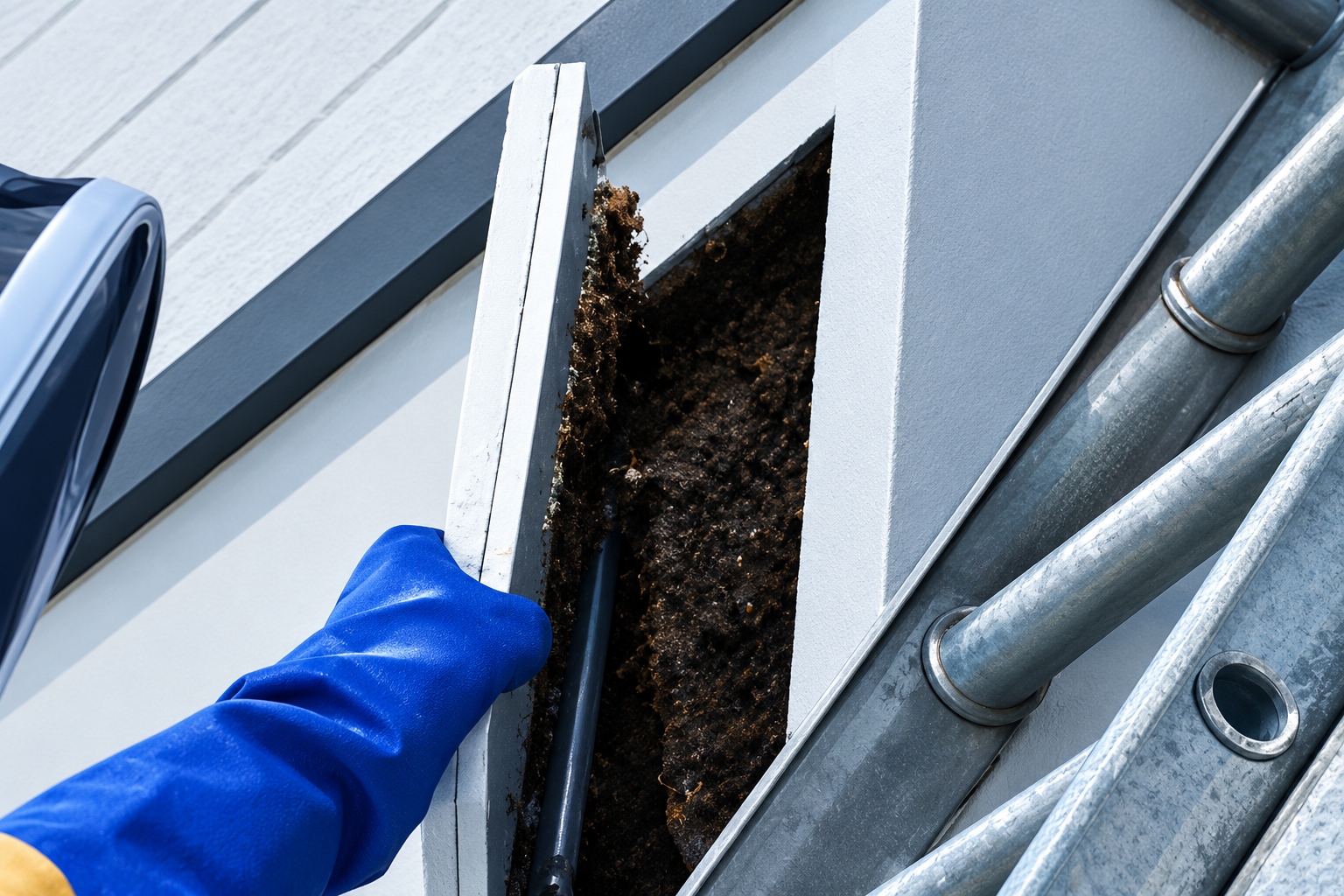
Technician inspecting a damaged wall cavity.
1. Wall Cavities Provide Shelter and Protection
Honey bees need a protected place to build their colony and raise their young. In nature, they may nest inside hollow trees or other enclosed spaces. Residential walls can offer similar conditions.
Wall cavities may protect a colony from direct sunlight, heavy rain, wind, and some predators. Depending on the building's construction, bees may enter through small exterior gaps and reach a larger, enclosed space behind the wall.
Common nesting locations include:
Concrete block walls with accessible openings
Exterior walls with cracks or gaps
Spaces behind siding or stucco
Wall sections near rooflines and soffits
Cavities around utility penetrations and other structural openings
Once worker bees locate a suitable cavity, the colony may begin building a wax honeycomb inside it. The exterior opening can remain surprisingly small even as the colony grows behind the wall.
2. Small Openings Can Lead to Large Hidden Spaces
One reason wall-nesting bees can be difficult to detect is that they do not need a large entrance to access a suitable cavity.
Bees may use gaps around pipes, vents, damaged seals, cracks, or construction joints. After entering through one of these openings, they can travel into a concealed space that is much larger than the entrance itself.
This is particularly relevant in Florida homes built with concrete blocks, stucco exteriors, and enclosed structural spaces. The exact nesting location depends on the building's design and the route available to the bees.
Homeowners may see only a few bees entering and leaving a hole. However, repeated activity at the same opening can indicate that the bees are using the space as a nest rather than simply passing through.
Important: Sealing the entrance without addressing an established colony can trap bees inside the structure or encourage them to find another way out. A professional assessment can help determine the safest next step.
3. Warm Florida Weather Can Support Colony Activity
Florida's climate allows honey bees to remain active for much of the year, although their activity varies with weather, local forage, and seasonal conditions.
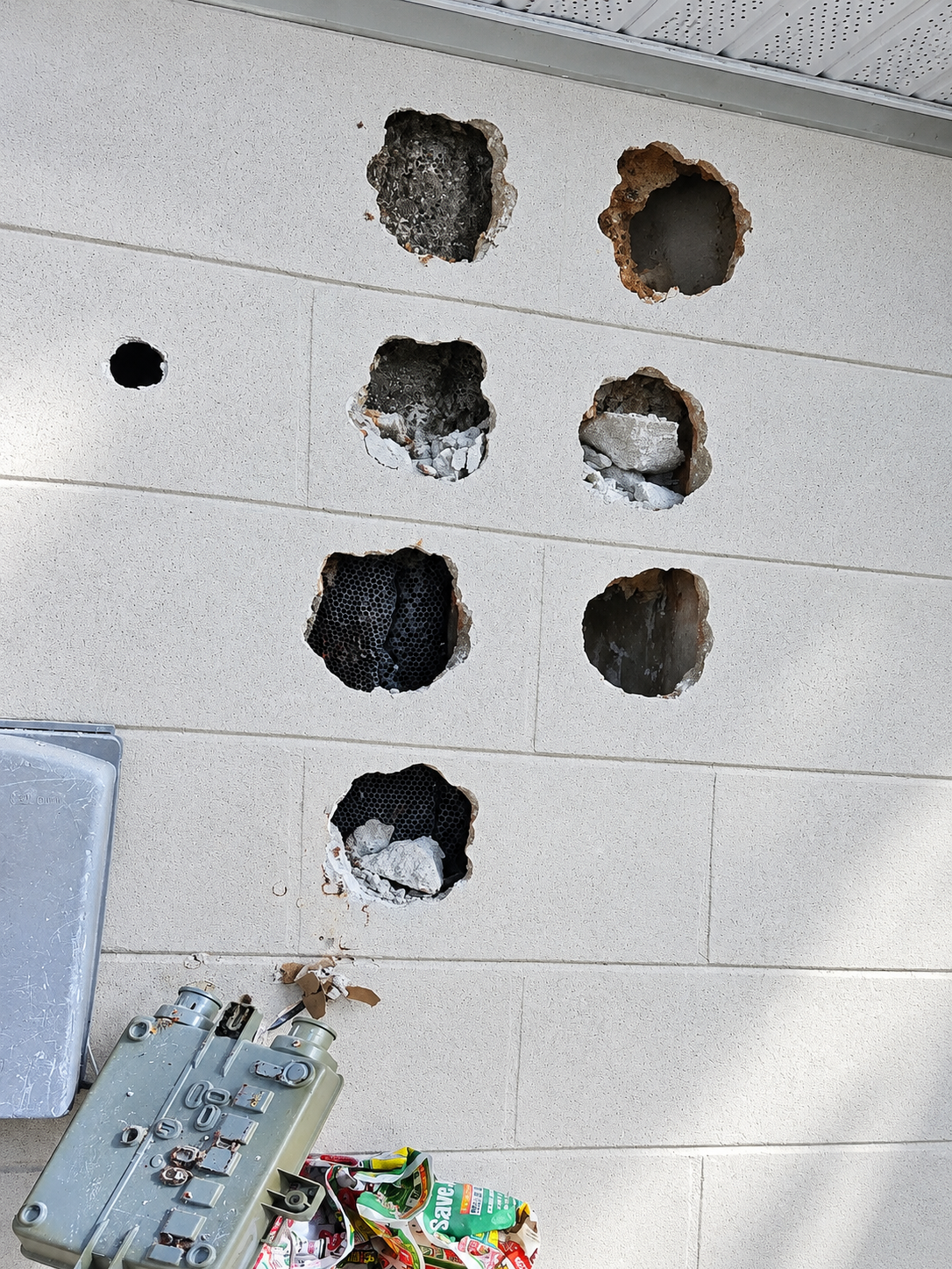
Concrete block wall with holes and exposed mesh during repair.
Warm temperatures and flowering plants provide opportunities for bees to collect nectar and pollen. When a colony becomes crowded or reproduces through swarming, a group of bees may leave its original hive and search for a new nesting location.
A swarm may investigate several possible sites before selecting one. A protected wall cavity can become attractive if it offers sufficient space and a suitable entrance.
This does not mean every wall opening will attract bees. Nest selection depends on several factors, including cavity size, accessibility, environmental conditions, and the presence of competing nesting sites.
For homeowners in Miami, Fort Lauderdale, Boca Raton, Cape Coral, and other parts of Florida, regular attention to exterior gaps and building maintenance can help reduce opportunities for bees to enter concealed spaces.
4. Signs Bees May Be Living Inside Your Wall
A hidden colony may remain unnoticed until bee activity becomes more obvious. Recognizing the warning signs early can help homeowners arrange an appropriate inspection.
Look for these common indicators:
Frequent bee traffic: Bees repeatedly entering and exiting one small opening may be using it as a colony entrance.
Buzzing sounds: A faint buzzing or humming behind a wall may indicate insect activity, although other causes are possible.
Bees appearing indoors: Bees occasionally emerging from wall gaps, electrical openings, or nearby interior spaces may suggest that an entry route connects to a concealed cavity.
Visible honeycomb or honey: If a cavity becomes exposed during renovation or inspection, wax comb, stored honey, and developing brood may reveal an established colony.
Persistent activity in the same location: Continued bee traffic over days or weeks deserves attention, particularly when the activity is concentrated around one opening.
These signs do not confirm a colony on their own. A qualified bee removal professional can evaluate the situation and determine whether honey bees are nesting inside the structure.
5. Can Bees Inside Wall Cavities Damage a House?
Honey bees do not normally consume building materials such as concrete, wood, or insulation. However, an established colony inside a wall can create secondary problems, especially if it remains after the bees have left or been removed.
Potential concerns include:
Honey and wax accumulation: An established colony can leave behind substantial amounts of honeycomb and stored honey.
Staining and residue: Honey may leak through openings or stain nearby materials if the comb becomes damaged.
Unwanted pests: Leftover honeycomb and organic material may attract ants, wax moths, or other pests.
Odors and deterioration: Honeycomb left inside an enclosed cavity can deteriorate, particularly when exposed to moisture or heat.
Repeated bee activity: If the original nesting conditions remain attractive, another swarm may investigate the same cavity.
The level of risk depends on the colony's size, the building's construction, and how long the nest has been present. Not every colony causes structural damage, but leaving honeycomb and honey inside a wall can create avoidable complications.
6. Why You Should Avoid DIY Bee Removal
Discovering bees in a wall can be concerning, but trying to remove them without the right equipment and experience can make the situation more difficult.
Spraying chemicals into an opening may kill some bees without removing the colony or its honeycomb. The remaining material can continue to create problems inside the wall.
Blocking the entrance can also prevent bees from leaving normally. Depending on the cavity and the colony's behavior, trapped bees may search for another exit, potentially bringing them into living areas.
Cutting into a wall without knowing the colony's location can expose the nest unexpectedly and may cause unnecessary property damage.
For these reasons, homeowners should avoid disturbing an active colony. Keep children and pets away from the entrance, do not insert tools into the opening, and arrange an assessment by an experienced professional.
7. How Professional Live Bee Removal Works
Professional bee removal begins with identifying the bee activity and evaluating where the colony may be located. The appropriate method depends on the wall's construction, the colony's position, and whether safe access is possible.
A typical assessment and removal process may involve:
Inspecting bee activity: The professional examines the entrance, flight patterns, and surrounding structure.
Locating the colony: Available access points and structural details help determine where the bees and honeycomb may be situated.
Planning the removal: The removal method is selected based on the building and the condition of the colony.
Removing the colony when feasible: Live removal and relocation may be possible, depending on the circumstances and access.
Addressing remaining comb: Where accessible, residual honeycomb and honey should be evaluated and removed as appropriate.
Recommending repairs: Once the work is complete, suitable repairs and sealing can help reduce the chance of future nesting.
Not every colony can be relocated using the same method, and no responsible professional should guarantee that every removal will be completely non-invasive. The priority is to assess the situation and choose an appropriate approach that considers both the property and the bees.
8. How to Help Prevent Bees From Nesting in Wall Cavities
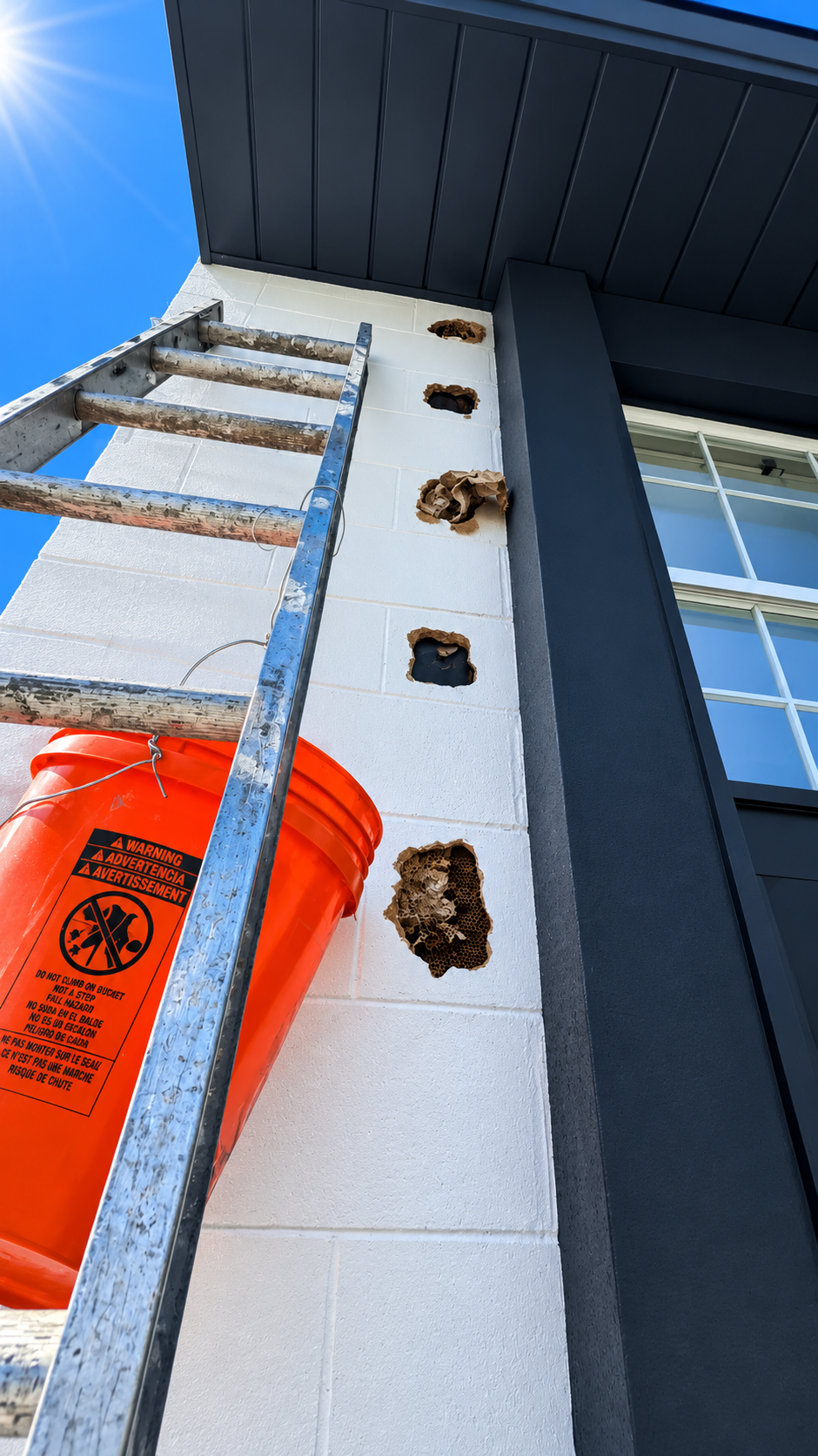
Bee Nest Removal and Wall Repair – Professional Bee Removal Services
Although it is impossible to guarantee that bees will never investigate a property, a few maintenance steps can reduce access to potential nesting spaces.
Inspect exterior walls for cracks, gaps, and deteriorating seals.
Maintain appropriate screening on vents and openings where screens are designed to be used.
Repair damaged soffits, siding, and other exterior components.
Seal unused gaps around utility penetrations after confirming they are not being used by an active colony.
Arrange professional advice if you notice repeated bee activity around one location.
Do not seal an opening where bees are actively entering and exiting until the situation has been assessed. If a colony is already established, removal and follow-up repairs may be necessary.
Protect Your Home With Professional Bee Removal in Florida
Bees build colonies between wall cavities because these enclosed spaces can offer shelter, protection, and room for honeycomb. A small entrance may conceal a much larger colony, making early identification and proper removal important for homeowners.
If you notice persistent bee activity around your exterior walls, avoid spraying the opening or sealing it prematurely. A professional inspection can help identify the problem and determine whether live bee removal and relocation are practical options.
Eco Bee Removal provides professional bee removal services focused on safe handling and live relocation whenever feasible. Whether bees are nesting in a concrete block wall, an exterior wall cavity, a soffit, or another part of your property, getting the right assessment can help protect your home and support the responsible treatment of honey bees.
Need help with bees in your wall?
Contact Eco Bee Removal to discuss your situation.
Phone: (888) 282-1886
Website: https://www.ecobeeremoval.com/
Eco Bee Removal — Florida's bee-friendly solution.
Frequently Asked Questions
Why do honey bees build nests inside walls?
Honey bees may choose wall cavities because they offer an enclosed, sheltered space where a colony can build honeycombs and raise young. Small exterior gaps can provide access to larger concealed cavities.
How can I tell if bees are living inside my wall?
Repeated bee traffic through one opening, persistent buzzing, or bees appearing indoors near a wall may indicate a hidden colony. A professional inspection is needed to confirm the source.
Will bees inside a wall damage my house?
The bees do not normally eat building materials, but honeycomb and stored honey can cause staining, residue, odors, or pest problems if left behind.
Can bees be removed from a wall without destroying it?
Sometimes. The possibility of minimally invasive or live removal depends on the colony's location, wall construction, and available access. The appropriate method can be determined after an inspection.
Should I seal a hole where bees are entering my wall?
No, not before the colony has been assessed. Sealing an active entrance may trap bees inside or cause them to seek another exit. Have the situation evaluated first.
Who should I contact for bee removal in Florida?
If you suspect a honey bee colony inside your wall, contact a qualified bee removal professional. Eco Bee Removal offers bee removal and live relocation services when feasible. Call (888) 282-1886 or visit www.ecobeeremoval.com to discuss your situation.