
How Bees Enter Homes Through Roof Vents and Openings.
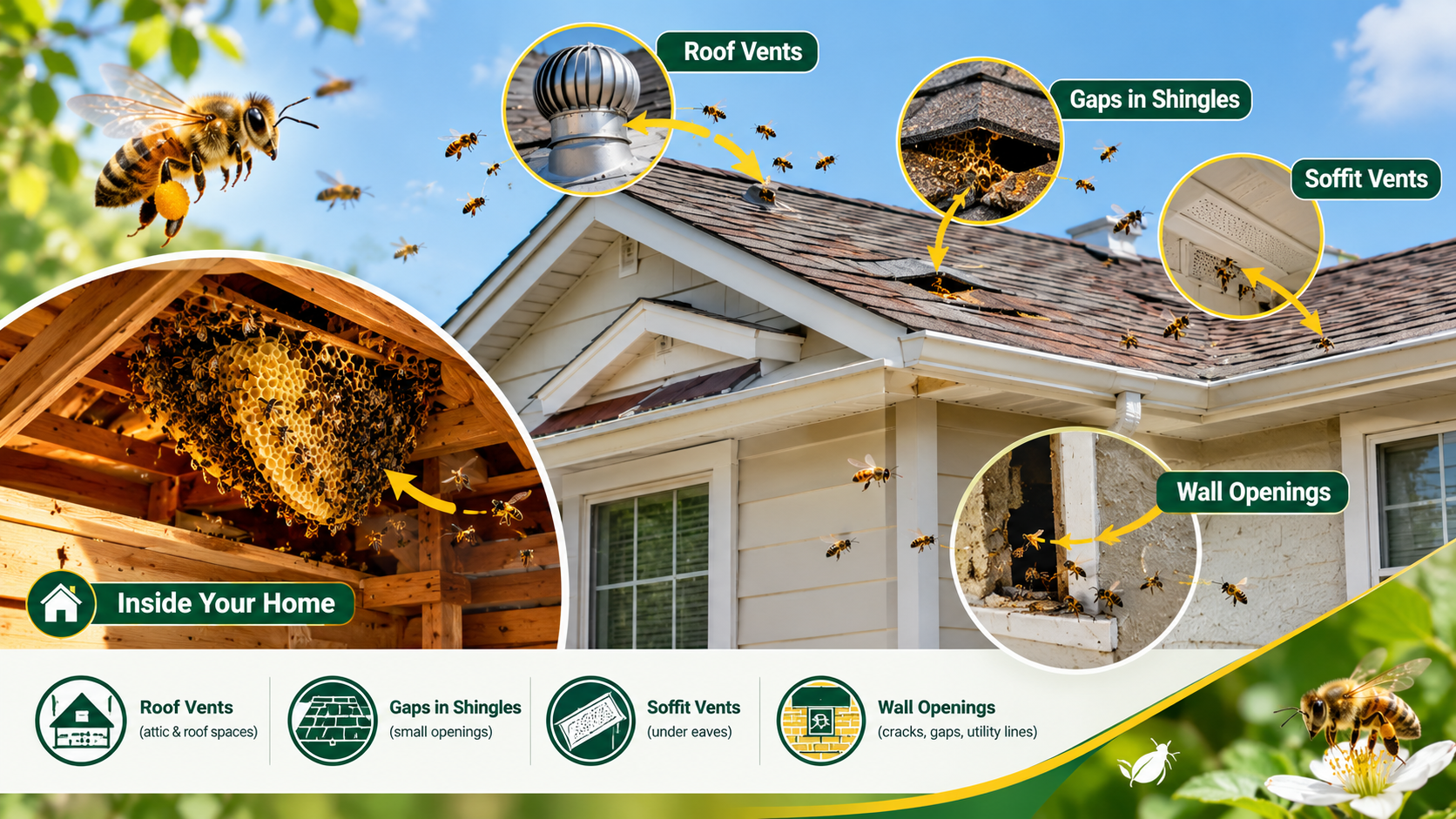
How Bees Enter Homes Through Roof Vents and Gaps.
Have you noticed bees flying around your roof, disappearing beneath the eaves, or entering through a small opening near a roof vent? These signs may indicate that bees have found a way into your home's roof cavity or attic.
For Florida homeowners, roof vents, soffits, fascia boards, and gaps around roofing materials can provide potential entry points for honey bees. Once inside, bees may find a protected space to establish a colony. What starts as a few bees near the roof can become a bigger problem if a colony settles inside the structure.
Understanding how bees enter homes through roof vents and openings can help you recognize early warning signs and decide when professional bee removal is necessary. With the right approach, homeowners can address the problem while protecting their property and considering live bee relocation whenever feasible.
Why Do Bees Enter Homes Through Roof Vents and Openings?
Honey bees look for sheltered locations where they can establish a colony, raise young, and store honey. In the wild, they often nest inside hollow trees and other protected cavities. Buildings can provide similar spaces when suitable openings are available.
Roof structures may contain gaps, enclosed cavities, and sheltered areas that attract swarms searching for a nesting location.
In Florida, warm weather can support bee activity during much of the year, although conditions vary by season and location. Residential roofs also provide numerous potential access points, particularly where materials meet or ventilation components are damaged.
Bees do not normally enter a home simply to explore the interior. When they repeatedly use the same opening, they may be accessing a nesting cavity, although activity outside alone does not confirm that a colony is present.
1. Roof Vents Can Provide Access to Hidden Spaces.
Roof vents help regulate airflow and moisture in certain parts of a building. However, damaged screens, missing covers, or gaps around ventilation components may allow insects to enter areas that should remain protected.
Depending on the roof design, bees may access an attic or another enclosed space through an inadequately protected vent opening.
Common warning signs include:
Bees repeatedly flying around the same roof vent.
Visible gaps or damaged screening around a vent.
Bees disappearing behind a vent cover or into the roof structure.
Increasing bee activity near the upper portion of the house.
Not every roof vent is a likely entry point. Properly installed and maintained screens can help prevent access, but the appropriate protection depends on the vent's design and ventilation requirements.
If you notice repeated bee activity around a roof vent, avoid blocking it while bees may be using it. A professional inspection can help determine whether the vent is connected to a hidden colony and what corrective steps are appropriate.
2. Soffits and Fascia Boards Can Hide Small Entry Points.
Soffits cover the underside of roof overhangs, while fascia boards run along the roof edge. Gaps between these components and adjoining materials can sometimes create access to sheltered spaces.
Over time, weather exposure, loose materials, damaged joints, or previous repairs may leave openings that are difficult to spot from the ground.
Bees may use these gaps to reach a roof cavity or an enclosed area near the attic. Once a colony becomes established, the bees may continue entering and exiting through an opening that appears too small to be significant.
Homeowners should pay attention to repeated flight activity beneath roof overhangs, particularly when bees consistently disappear into one location.
However, visible bees near a soffit do not always mean a hive is inside it. The colony could be elsewhere in the structure, so identifying the actual nesting location is an important part of professional bee removal.
3. Gaps Around Roofing Materials May Allow Bees Inside.
Roofing systems contain several connected components, including shingles, flashing, vents, fascia, and other materials. Gaps can develop when components become damaged, deteriorate, or are installed incorrectly.
Potential access points include:
Gaps around roof flashing.
Loose or damaged shingles.
Openings around pipes and cables.
Cracks near roof edges and exterior joints.
Spaces where roofing materials meet walls or other structures.
These openings can provide access to protected cavities beneath the roof surface.
Bees may also enter through an opening that was originally created for a different purpose, such as a utility line or ventilation component. This is why identifying the entrance can be just as important as locating the colony itself.
If bees repeatedly use a particular gap, avoid attempting to seal it immediately. Blocking an active entrance may trap bees inside or cause them to seek another route into the building.
4. How Can You Tell If Bees Are Nesting Inside Your Roof?
The clearest warning sign is repeated bee activity at the same entrance. A few bees passing over the roof may simply be foraging, but consistent traffic through one opening deserves closer attention.
Other possible signs include:
Increased bee activity: A steady stream of bees entering and leaving one area may indicate an established colony.
Buzzing near the ceiling: Sounds near the attic or roof cavity can sometimes be associated with an active hive, although buzzing alone is not conclusive.
Visible honeycomb: If honeycomb becomes visible through an existing opening or during a professional inspection, it can provide direct evidence of nesting activity.
Staining or unusual odors: Honey residue and hive debris may cause localized staining or odors, depending on the location and condition of the colony.
Recurring bee activity after a swarm: A swarm may temporarily gather on a building before moving elsewhere. Continued activity at the same opening over time may suggest that the bees have established a nest.
Do not climb onto the roof or reach into an opening to investigate. Roof work presents fall risks, and disturbing a colony can increase the risk of stings.
5. What Should You Do If Bees Enter Through a Roof Vent?
If you suspect bees are entering your home through a roof vent or another opening, start by observing their activity from a safe distance.
Note where the bees enter, how frequently they return, and whether the activity appears concentrated around one part of the roof. These observations can help a professional understand the situation.
Avoid spraying chemicals into the opening, striking the vent, or sealing the entrance while the colony may be active. These actions can complicate removal and may leave bees or honeycomb inside the structure.
Instead, contact a qualified bee removal specialist who can inspect the entry point, assess the likely nesting location, and explain the available options.
For Florida homeowners, professional bee removal can be particularly helpful when the suspected colony is located in an attic, soffit, roof cavity, or another difficult-to-access part of the building.
6. How Does Professional Bee Removal and Live Relocation Work?
Removing bees from a roof structure requires more than addressing the insects visible outside. If an established colony is present, the specialist must consider its location, accessibility, and the condition of the surrounding materials.
A professional assessment may involve observing bee flight patterns, inspecting the roofline and ventilation components, and evaluating accessible areas of the structure. Additional inspection methods may be appropriate when the colony is hidden behind building materials.
When conditions allow, live bee removal may involve recovering the colony and relocating the bees rather than exterminating them. The process depends on the nesting location, the colony's condition, and the access available.
It is also important to address remaining honeycomb when necessary. Honeycomb and stored honey left inside a roof cavity can attract other pests, cause odors, and potentially create staining or material damage.
After the colony has been properly addressed, the original entry point can be repaired or screened as appropriate. Any work involving roof ventilation should preserve the ventilation system's intended function.
At Eco Bee Removal, the focus is on professional bee removal and live relocation whenever feasible, with attention to both the bees and the property.
7. How to Help Prevent Bees From Entering Your Roof?
Routine roof maintenance can reduce opportunities for bees to enter unwanted spaces. Although no property can be guaranteed to remain free of nesting attempts, maintaining the building envelope helps limit access to sheltered cavities.
Consider these practical steps:
Inspect soffits, fascia boards, and roof edges periodically.
Repair damaged vent screens and loose covers.
Check flashing and exterior joints for gaps.
Address damaged roofing materials promptly.
Ensure openings around pipes and cables are properly protected.
Arrange an inspection when bees repeatedly use the same entrance.
Any screening or repair should be appropriate for the structure and must not obstruct required ventilation.
If an active colony is already present, have it addressed before permanently closing the entrance.
Frequently Asked Questions
Can bees enter a house through roof vents?
Yes. If a vent screen is damaged, missing, or inadequately protected, bees may gain access to an attic or connected roof cavity. Repeated bee activity near a vent warrants inspection.
Do bees build hives inside roof cavities?
Honey bees can establish colonies in suitable cavities beneath roofs, near soffits, or inside other protected structural spaces. The actual location depends on the building design and available access.
Should I seal a roof opening where bees are entering?
Not while a colony may still be active. Sealing the opening prematurely can trap bees or redirect them into other parts of the building. Have the situation assessed first.
Can a professional remove bees without damaging my roof?
The amount of access required depends on the colony's location and the roof construction. Some colonies can be accessed through existing openings, while others require carefully planned access and subsequent repairs.
Is live bee relocation available in Florida?
Live relocation may be possible when the colony's location and condition permit it. A professional bee removal specialist can inspect the situation and explain the practical options.
Contact Eco Bee Removal for Professional Bee Removal in Florida
Bees entering through roof vents, soffits, or gaps in roofing materials should not be ignored when the activity continues at the same location. An established colony may remain hidden until its presence becomes more noticeable.
Early assessment can help determine whether bees are nesting inside your roof, identify the likely entry point, and establish the next steps for removal and prevention.
Eco Bee Removal focuses on professional, eco-friendly bee removal and live relocation whenever feasible. If you have noticed bees entering your roof, attic, or soffit, professional guidance can help you protect your property while considering an appropriate solution for the colony.
Visit www.ecobeeremoval.com or call (888) 282-1886 to discuss your bee removal needs.
Protect your home, address hidden bee colonies responsibly, and give honey bees the opportunity for relocation when conditions allow.