
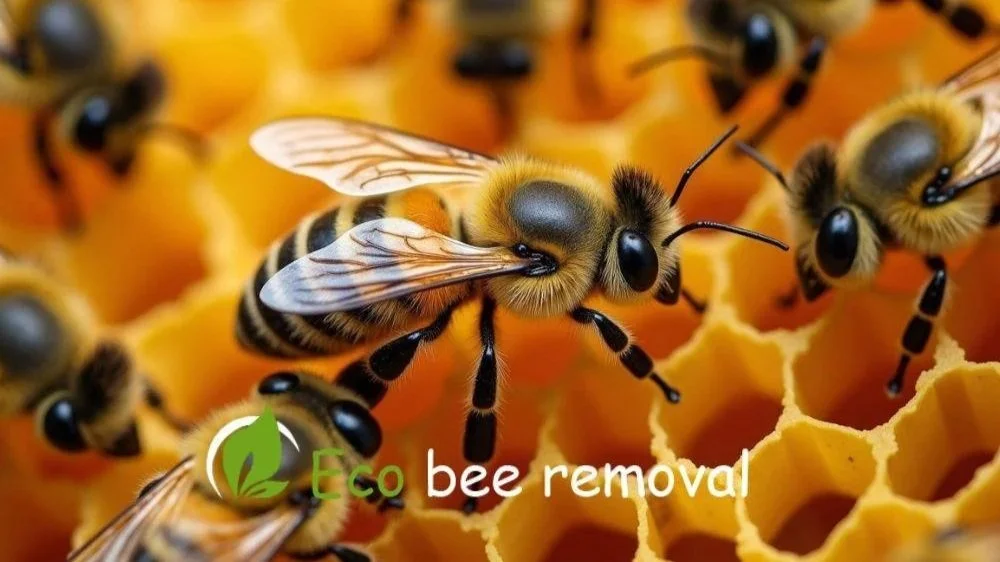
Eco bee removal specialists safely relocating honeybees.
When people think about bees, the first things that usually come to mind are honey, buzzing sounds, and pollination. But one of the most fascinating parts of bee behavior is something most homeowners never realize: bees recognize their hive entirely by smell. In fact, their entire colony runs on scent communication — a natural “chemical language” that keeps thousands of bees organized, efficient, and loyal to their home.
For anyone dealing with unwanted beehives around their home in Florida, understanding this scent science can help explain why bees choose certain places to nest… and why they fiercely protect their hive once established.
In this post, we’ll break down the science of hive scent signatures, why smell is such a powerful tool for bees, and how this knowledge helps with safe, eco-friendly bee removal and relocation.
Why Smell Matters So Much to Bees
Bees navigate using the sun, landmarks, and their internal compass — but smell is their most accurate system for identifying home. A beehive can hold tens of thousands of bees, yet each individual can leave the hive, travel miles away, and still return to the correct entrance.
Why?
Because every hive has a unique scent signature, like a fingerprint.
Bees rely on scent for:
Hive identification
Communication
Guarding against intruders
Finding food sources
Following trail pheromones
Recognizing the queen
Maintaining colony unity
Their sense of smell is incredibly advanced — studies show bees have over 170 odor receptors, far more than many insects. This allows them to detect the slightest chemical changes in the air.
The Hive’s “Scent Signature” — A Chemical Identity
Each hive produces a special blend of pheromones and natural odors. This mixture creates a smell that every bee in the colony instantly recognizes. The scent comes from:
1. The Queen’s Pheromones
The queen releases a chemical known as queen mandibular pheromone (QMP).
It tells worker bees:
“This is your colony.”
“This is your queen.”
“Keep working and stay organized.”
If this scent disappears, bees become confused, aggressive, or try to raise a new queen.
2. Worker Bee Odors
Worker bees produce colony pheromones that help guide behavior, including:
Nursing
Wax building
Foraging
Defense
All of these contribute to the hive’s unique smell.
3. Honeycomb, Wax, and Honey
Fresh wax, stored honey, pollen, and propolis (bee glue) add rich layers to the scent profile.
This is why older hives smell completely different from new ones.
4. Environmental Smells
Bees also pick up scents from:
Florida flowers
Trees
Stucco walls or wood
Attics or cavities
Moisture levels
When bees build a hive inside walls, soffits, or attics, the structure itself becomes part of the hive’s scent identity.
How Bees Use Scent to Return Home
After leaving the hive to collect nectar or water, bees can fly 2 to 5 miles away. When they return, they rely on a mix of navigation systems, but the “final step” is always scent.
Here’s how they do it:
1. Homing Orientation
Young bees perform “orientation flights” — small circles around the hive — to learn its scent and location before they ever start foraging.
2. Fanning Behavior
At the entrance, worker bees stand with their abdomen lifted and fan their wings.
This spreads pheromones into the air, helping returning bees find the hive quickly.
3. Trail Pheromones
Foragers sometimes leave scent trails, especially when locating water or highly valuable nectar sources.
4. Guard Bees Sniff Every Visitor
Guard bees smell every bee entering the hive.
If the scent doesn’t match the colony’s identity, the guard bees will:
Block entry
Raise alarm pheromones
Attack intruders
This scent-checking system is one reason why foreign bees or wasps can’t just walk into a hive.
Why You Should Never Seal a Hive Without Removing It
Because bees rely so heavily on scent, sealing an active beehive without removing it causes major problems, such as:
Bees are searching aggressively for any opening
Bees entering your home
Strong odors from dead bees
Melting honey is soaking into the walls
Wax moths and pests are invading the structure
Attracting new swarms again due to leftover scent
Even after a hive is removed, the scent signature can last months, which is why professional bee removal companies (like Eco Bee Removal) always perform:
Full hive extraction
Honey + wax removal
Proper cleaning
Scent neutralizing
Bee-proofing entry points
This is the only safe, long-term solution.
What Homeowners Should Know About Scent Attraction
Here in Florida, scent plays a huge role in bee behavior — especially during spring and summer swarming seasons.
1. Bees Prefer Areas With Strong Odor “Traps.”
Bees love spaces where smell collects, such as:
Attics
Wall voids
Soffits
Roof joints
Old sheds
Hollow trees
These areas trap warm, stable air, making the location ideal for a new hive.
2. Leftover Hive Odors Attract New Swarms
Even after bees are gone, the scent of old wax and honey can attract new colonies year after year unless fully removed.
3. Perfumes, garbage, old honey, fruit, and flowers can draw scout bees
This is why homeowners often see bees “checking out” a house days or weeks before a hive appears.
How Bee Removal Experts Use Scent Knowledge
Understanding hive scent science helps professionals safely extract and relocate bees without harming the colony.
1. Location Detection
Experienced specialists can often smell the hive before they open the wall — especially older colonies.
2. Smoke Interruption
Smoke masks the colony scent, calming bees and reducing defensive behavior during removal.
3. Relocation Success
When relocating bees, professionals keep the original hive materials to help bees accept their new home using familiar scents.
4. Scent Neutralization
After removal, technicians apply:
Enzyme cleaners
Deodorizing sprays
Natural neutralizers
Sealants
This prevents new swarms from returning.
Why Bees Rarely Mix Up Their Hive with Another
Bees rarely enter the wrong hive because every colony has its own unique smell.
However, mistakes can happen when:
Two hives are placed too close together
Weather reduces scent intensity
Heatwaves spread odors
A hive loses its queen
But usually, the guard bees still detect the difference and reject the intruder instantly.
The “Scent Signature” Is Why Bee Colonies Are So Loyal
A beehive isn’t just a home — it’s a chemical identity.
Every bee knows:
Who belongs
Where home is
What to defend
How to return
All because of scent.
This incredibly advanced chemical communication system is what allows honey bees to operate as one unified super-organism.
Final Thoughts: Understanding Bee Scent Helps With Better Bee Removal
Knowing how bees recognize their hive by smell helps homeowners and professionals take smarter steps toward:
Safe live bee removal
Eco-friendly relocation
Preventing future infestations
Protecting Florida’s pollinators
Bees don’t choose homes at random — they follow smell. And once established, their scent signature keeps the colony connected, organized, and loyal.
If you suspect a hive inside your walls, attic, or roof, don’t seal the area.
Contact a trained bee removal expert who understands how bee scent behavior works and can perform a safe, complete, and environmentally responsible extraction.