
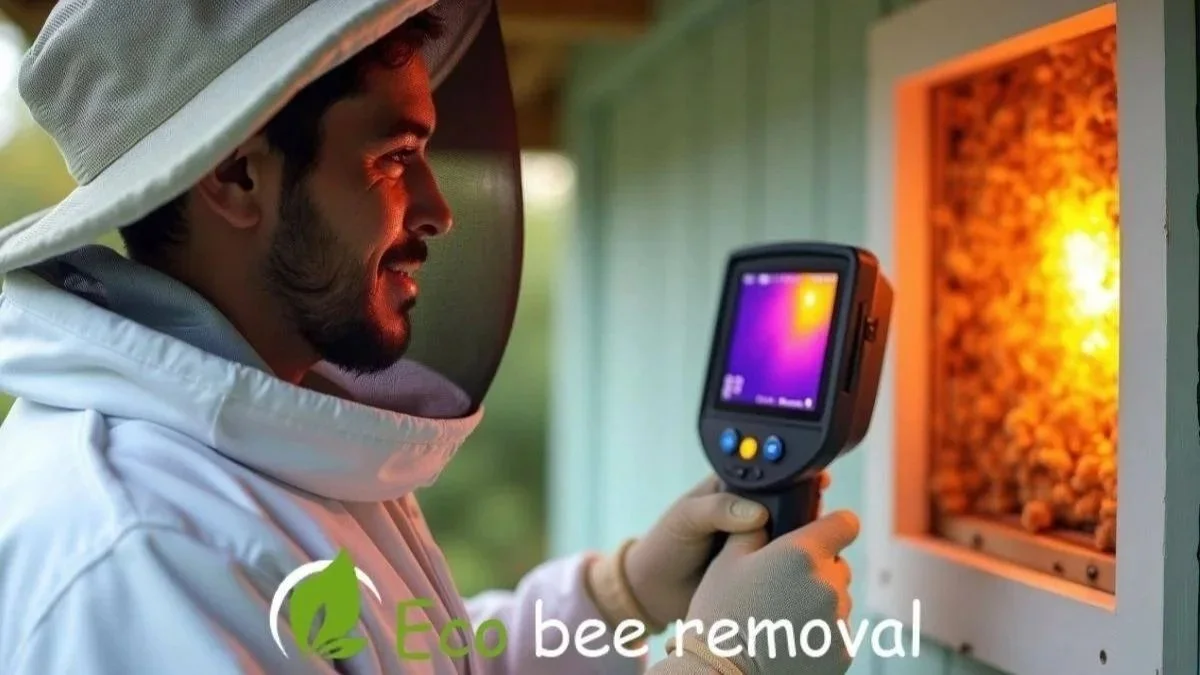
Thermal imaging used to locate a hidden bee hive inside a wall.
When bees build a hive inside a wall, attic, soffit, or crawl space, it can remain completely invisible from the outside. Many homeowners only notice the problem when honey begins to leak, bees enter the living space, or the wall begins to smell. Today, one of the most advanced and eco-friendly ways to find these hidden hives is thermal imaging.
This powerful technology helps professional bee removal specialists detect bee colonies without tearing open walls, causing damage, or guessing their location. In this article, we’ll explain how thermal imaging works, why it’s incredibly effective, and how homeowners can benefit from this non-invasive method.
What Is Thermal Imaging?
Thermal imaging, also called infrared imaging, is a technology that detects differences in surface temperatures. Every object emits some level of heat—warm objects emit more infrared energy than cool ones.
When a professional uses a thermal camera, it converts these heat signatures into a colour-coded image. Warmer areas usually appear as yellow, orange, or red, while cooler spaces appear blue or purple.
This makes it incredibly easy to identify a beehive hidden inside a wall because an active colony produces significant heat.
Why Hidden Bee Hives Produce Heat
A bee colony generates heat constantly. Inside a hive, bees maintain a stable temperature between 89°F and 95°F (31°C–35°C).
Why so much heat?
✔ Bees cluster together
✔ Thousands of bodies generate warmth
✔ Honey production releases energy
✔ Brood (baby bees) require stable warmth
Because of these factors, the area around a hive becomes warmer than the surrounding wall or attic. This temperature difference is exactly what thermal imaging detects.
How Thermal Imaging Detects Bee Hives in Walls
The process is fast, clean, and highly accurate. Here’s how professionals use thermal cameras to locate hidden hives:
1. Scanning the Walls and Exterior Surfaces
A technician slowly scans areas of concern, such as:
walls
attic ceilings
soffits
siding
chimneys
stucco cracks
rooflines
Anywhere bees may enter, thermal imaging can reveal the heat signature of a hive.
2. Identifying Hotspots from Bee Activity
An active beehive often appears as:
a bright yellow-orange spot on the thermal screen
an irregular-shaped warm area
a clustered heat patch around one side of a wall
This hotspot indicates where thousands of bees are generating heat behind the surface.
3. Confirming Hive Size and Shape
Thermal imaging helps estimate:
size of the hive
location of honeycomb
direction the colony is expanding
How deep into the structure does the hive run
This helps plan a safe and efficient removal without unnecessary damage.
4. Finding the Bee Entry Point
Even if bees enter from a tiny hole or crack, thermal cameras can track heat trails to reveal:
The exact opening bees use
How long has the hive been there
whether bees are spreading into other areas
This information is crucial for sealing the structure after removal.
Why Thermal Imaging Is Better Than Guesswork
Before modern technology, detecting a hidden hive relied on tapping walls, listening for buzzing, and drilling small inspection holes.
Unfortunately, this often led to:
misdiagnosis
cutting open the wrong area
unnecessary home damage
Angry bees are emerging in the living space
Thermal imaging solves those problems.
Benefits of using thermal imaging for bee hive detection:
✔ Completely non-invasive
✔ No drilling or cutting required
✔ Fast and highly accurate
✔ Works on stucco, brick, wood, drywall, siding, and concrete
✔ Detects even large or old hives
✔ Safe for both bees and homeowners
Most importantly, it makes live bee removal safer and more successful.
How Professionals Use Thermal Imaging for Live Bee Removal
Thermal imaging isn’t just for detecting the hive—it also guides the entire removal process.
1. Planning the Safest Access Point
Once the warm area is located, the technician selects the smallest and most efficient section of the wall to open.
This reduces repair costs and prevents unnecessary demolition.
2. Avoiding Utility Lines
Thermal cameras can also highlight warm pipes, wires, and other structural elements, helping prevent accidental damage.
3. Faster Removal and Less Disturbance
Knowing the exact hive location:
shortens removal time
reduces stress on the colony
increases successful live relocation
prevents bees from spreading deeper into the structure
This creates a much safer job for the technician AND the bees.
Why Homeowners Should Never Attempt DIY Detection
Some homeowners try to locate hives themselves using stethoscopes, sound apps, or by drilling small holes.
This usually leads to bigger issues:
❌ Bees rushing into the home
❌ Honey leaking into walls
❌ Attracting ants, rodents, and roaches
❌ Damaging electrical wiring
❌ Collapsing the honeycomb
Without proper tools and protective gear, DIY methods can be dangerous.
Thermal imaging eliminates the risk.
Where Hidden Bee Hives Commonly Form in Florida Homes
Florida’s warm climate makes it one of the top states where bees frequently build inside homes.
Thermal imaging helps locate hidden hives in:
attics
soffits
behind stucco walls
inside chimneys
under the roof tiles
inside block walls
behind vinyl siding
garage walls
shed walls
Older homes and homes with stucco cracks are especially vulnerable.
Signs You May Need a Thermal Imaging Inspection
Call a professional if you notice:
🐝 bees entering a small opening
🐝 buzzing sounds in walls
🐝 honey-like smell indoors
🐝 dark stains or sticky spots on walls
🐝 increased bee activity around your home
🐝 warm “soft” spots on walls
Even if bees disappear for a few hours, the hive will remain—and grow.
Why Thermal Imaging Improves Google Ranking for Bee Removal Services
Using advanced technology sets your bee removal service apart.
It shows professionalism, safety, and expertise—qualities Google rewards.
When homeowners search terms like:
“bee hive in wall detection”
“thermal imaging bee removal near me”
“Find a hidden beehive”
Your content becomes more relevant, boosting your ranking.
This blog post deliberately includes:
✔ long-tail keywords
✔ location-agnostic language
✔ semantic variations
✔ conversational flow
✔ structured headers
All of this helps search engines understand the topic clearly.
Conclusion: Thermal Imaging Is the Future of Safe Bee Hive Detection
Thermal imaging has revolutionised how professionals locate and remove hidden bee hives. It’s fast, safe, accurate, and completely non-destructive. Whether the hive is inside a wall, attic, roof, or stucco structure, infrared imaging gives beekeepers the ability to see behind surfaces without causing damage.
For homeowners, it means:
no guesswork
no unnecessary repairs
a safer live bee removal process
peace of mind knowing the hive is fully removed
If you suspect a hidden hive in your home, thermal imaging is the smartest and most eco-friendly way to uncover the problem and begin safe relocation.