
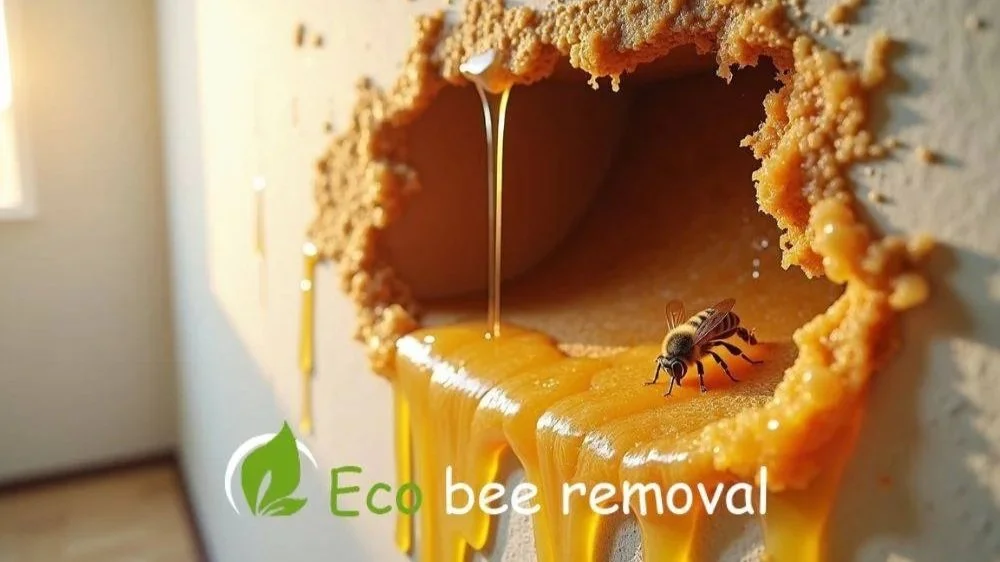
Fermented honey leaking inside wall from hidden hive.
When most people think of honey, they imagine a sweet, golden liquid that can last for decades without spoiling. And that’s true—properly stored honey doesn’t ferment or go bad. But inside Florida homes, especially when bees build hives inside walls, the story is very different.
Florida’s hot, humid climate creates the perfect conditions for honey to ferment, leak, attract pests, and damage your home.
In this article, we’ll explain why honey ferments inside walls, what Florida weather has to do with it, how it affects your home, and why professional, eco-friendly bee removal is the safest solution.
Florida’s Humidity: The Real Reason Honey Ferments in Walls
Honey stays fresh because it has a low moisture content—typically around 17% water. Bees work hard to evaporate as much moisture as possible before sealing it with wax.
But when a hive is hidden inside the warm, sealed, humid walls of a Florida home, the honey begins absorbing moisture from the air. And once honey reaches a moisture level of over 20%, fermentation begins almost immediately.
How Florida humidity accelerates honey fermentation:
Florida humidity often stays 70%–90% all year
Moisture gets trapped inside the wall cavity
Honey absorbs water through the comb
Natural yeasts begin turning sugars into alcohol
The honey bubbles, swells, and eventually leaks
This is why Florida homes are high-risk for hidden hives and fermented honey issues.
The Science Behind Honey Fermentation
Fermentation happens when wild yeasts—which naturally exist in honey—begin digesting sugars.
Inside a sealed hive, this doesn’t happen because the honey is dehydrated and stable.
But high moisture + warm temperature = perfect fermentation conditions.
Inside your wall, the honey can reach temperatures of 95°F or more, especially in the summer. Once fermentation starts:
The honey becomes watery
Gas bubbles form
Pressure builds up inside the comb
Honey can burst out and leak down the walls
This leaking honey attracts ants, roaches, termites, rodents, and even new swarms of bees.
What Happens When Honey Ferments Inside Your Wall? (Florida Homeowner Problems)
Fermented honey causes far more damage than most people expect. Here’s what Florida homeowners typically experience:
1. A Strong Sour or Alcohol-Like Smell
Fermenting honey smells sour, like vinegar or spoiled fruit. Sometimes the odor is so strong, homeowners first think something died in the wall.
2. Sticky Honey Leaking Out of Walls
When the honey liquefies, it runs:
down insulation
through electrical outlets
behind baseboards
onto floors and carpets
If it reaches drywall, it stains permanently.
3. Mold Growth
Florida’s hot humidity + leaking honey = rapid mold growth inside walls.
The sugars feed the mold, causing:
musty odors
black staining
air-quality problems
4. Attraction of Pests
Fermenting honey is like a magnet for Florida pests:
ants
roaches
beetles
rodents
other bee swarms
A homeowner may remove the bees but still face months of pest issues if the honey isn’t removed.
5. Structural Damage
Large hives can weigh 50–100 pounds.
When honey melts or ferments:
Drywall gets soft
Wooden studs absorb moisture
paint bubbles and peels
ceilings sag
If the hive is behind stucco, moisture can cause stucco cracks and long-term water damage.
Why Florida Homes Are More Vulnerable to Fermenting Honey
Florida is one of the top states in the U.S. for bee infestations in walls because of:
✔ Warm Weather All Year
Bees remain active longer, increasing the chance of multiple hive expansions inside walls.
✔ High Humidity
Florida’s humidity is the main factor that triggers fermentation.
✔ Popular Building Materials
Stucco, siding, and soffits provide small gaps bees use to enter walls.
✔ Hurricane Damage
After storms, small roof and soffit openings make it easier for bees to move in.
This combination makes honey fermentation a very common issue across Miami, Tampa, Orlando, Sarasota, Cape Coral, and other Florida regions.
Why Simply Killing Bees Makes the Problem Worse
Some exterminators kill the bees and leave the hive in the wall. But without bees to cool the hive or remove excess moisture, things get bad fast:
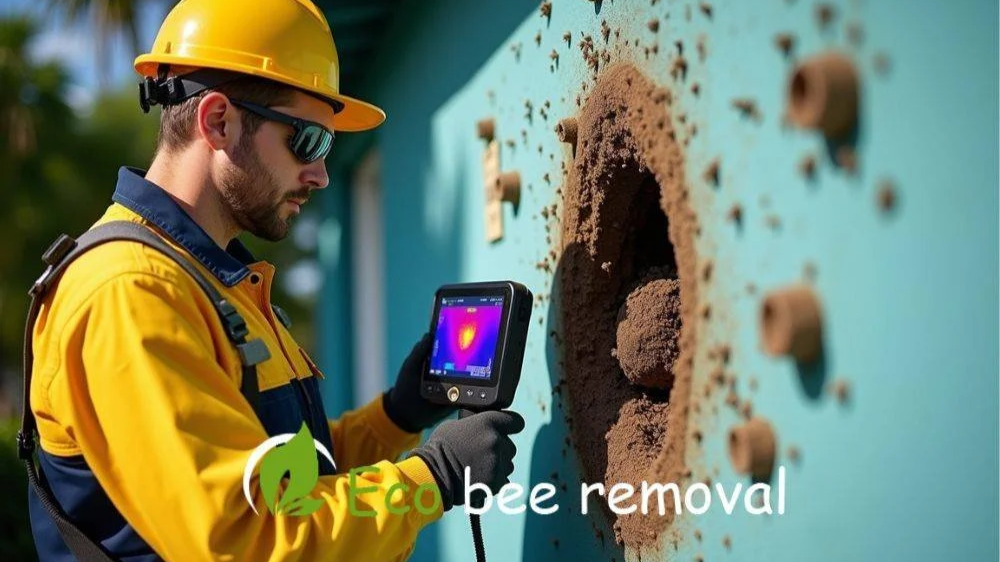
Thermal imaging helps locate hidden wall hives in Florida homes.
What happens to a dead hive in Florida's humidity?
Honey heats up and melts.
Honey ferments and bursts out of combs
Wax melts and spreads
Larvae rot
Ants and roaches invade
A strong odor fills the home
A new swarm may move into the old hive within weeks
This is why Florida homeowners should never kill bees.
Live removal + hive cleanup is the only safe method.
How Professionals Remove Fermenting Honey From Walls
Eco Bee Removal specializes in live bee relocation and full hive cleanup. Here’s how proper removal prevents damage:
1. Thermal Imaging Inspection
This allows professionals to locate:
the exact hive location
hive size
honey buildup
temperature hot spots
Thermal imaging ensures precise cutting, saving homeowners money.
2. Live Bee Removal
Bee experts safely relocate the bees to local beekeepers, protecting Florida’s pollinators.
3. Full Hive Extraction
All honey, wax, dead bees, brood, and fermented liquids must be removed.
4. Deep Cleaning & Odor Neutralizing
Enzymes are sprayed to eliminate:
fermented honey smell
wax pheromones
scout bee attractants
5. Repair & Bee-Proofing
Professionals seal the entry point so the hive can’t return.
How to Tell If You Have Fermented Honey in Your Walls
You may have a fermenting hive if you notice:
a sour smell inside the house
sticky spots on the wall or baseboard
brown stains leaking downward
Constant ants or roaches in one area
warm spots on walls
buzzing sounds, especially at night
If you see any of these signs, call a bee specialist immediately.
The longer the honey stays inside the walls in Florida, the worse the damage becomes.
Why Eco-Friendly Bee Removal Is the Best Option
Saving the bees protects Florida agriculture, gardens, and natural ecosystems.
Eco-friendly bee removal ensures:
Bees are safely relocated
No chemicals enter your home
No rotting honey or fermenting hive is left behind
long-term prevention is guaranteed
This is the method recommended by Florida wildlife experts and professional beekeepers.
📞 Need Bee Removal in Florida? We Can Help
Eco Bee Removal provides fast, safe, and affordable:
bee removal
hive extraction
wall repair
swarm removal
live relocation
We service Miami, Tampa, Orlando, Naples, Sarasota, Cape Coral, West Palm Beach, and all surrounding areas.
Call today: (888) 282-1886
Visit: EcoBeeRemoval.com
✅ Final Thoughts
Honey rarely spoils—but inside a humid Florida wall, it becomes a sticky, fermenting problem that can damage your home fast.
If you suspect bees inside your wall, the best solution is immediate professional removal, not extermination.
Florida humidity + hidden hives = fermented honey disaster.
Protect your home, save the bees, and keep your family safe with eco-friendly bee removal.