
The Science Behind Honey Melting in Attics During Summer
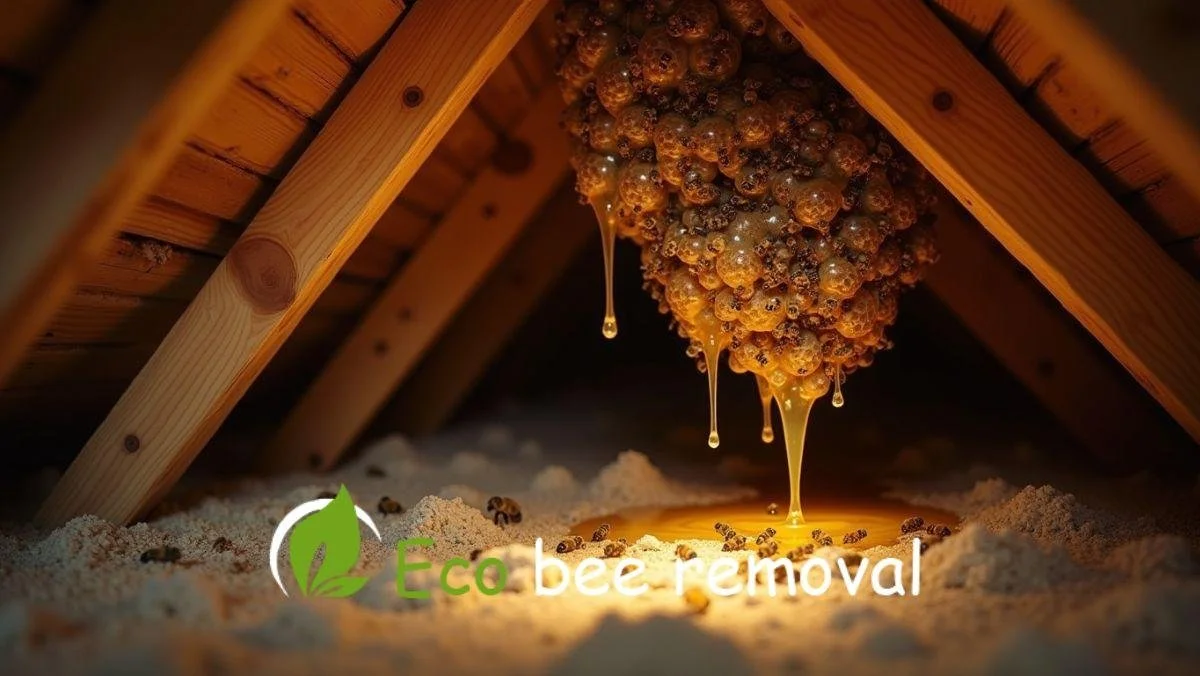
Honey Melting in Attic Bee Hive During Summer.
During the peak of summer, many homeowners in warm climates like Florida experience a strange and messy problem—honey dripping from ceilings, walls, or light fixtures. While it may seem unbelievable, this phenomenon is very real and has a clear scientific explanation. When bees build hives inside attics, extreme heat can cause stored honey to soften, liquefy, and leak into living spaces.
Understanding why this happens isn’t just fascinating—it’s essential for protecting your home, preventing costly damage, and ensuring bees are handled safely and responsibly. In this article, we’ll explore the science behind honey melting in attics, why it happens more often in summer, and what homeowners should do if they suspect a hive overhead.
Why Bees Choose Attics in the First Place
Before we dive into melting honey, it’s important to understand why bees are attracted to attics.
Attics closely mimic the natural environments bees prefer:
Warm and dry
Dark and protected
Elevated from predators
Enclosed with limited airflow
In Florida and other warm states, attics provide an ideal nesting site—especially when natural cavities or trees are limited. Once bees enter through small gaps near soffits, rooflines, or vents, they can build a large hive completely out of sight.
How Hot Do Attics Get in Summer?
Many homeowners underestimate attic temperatures. While outdoor temperatures may hover around 90–95°F, attic temperatures can soar much higher.
Typical summer attic temperatures:
Mild summer day: 120°F
Hot summer day: 140–150°F
Poorly ventilated attic: up to 160°F
These extreme conditions play a major role in honey melting.
The Melting Point of Honey: The Science Explained
Honey doesn’t have a single “melting point” like ice. Instead, it softens and becomes more fluid as temperatures rise.
Key scientific facts about honey:
Honey begins to thicken at 95°F
At 104–110°F, honey becomes noticeably runny
Above 120°F, honey can fully liquefy
Prolonged heat breaks down wax caps that hold honey in place
Bees typically regulate the hive temperature around 95°F through wing fanning and ventilation. However, when a hive is trapped inside an attic, bees often cannot control the heat, especially during extreme summer weather.
What Happens Inside an Overheated Attic Hive?
When attic temperatures rise beyond what bees can manage, several things happen:
1. Wax Comb Softens
Bees store honey inside wax comb structures. Beeswax begins to soften around 100–105°F and can deform at higher temperatures.
2. Honey Becomes Liquid
As honey thins, it loses its ability to stay contained within the comb.
3. Gravity Takes Over
Liquefied honey drips downward—seeping through insulation, drywall, and ceiling fixtures.
4. Structural Collapse
In severe cases, entire sections of the hive collapse, releasing gallons of honey at once.
Signs of Melting Honey in Your Attic
Many homeowners don’t realize they have an attic hive until damage appears. Watch for these warning signs:
Sticky spots on ceilings or walls
Brown or amber stains spreading over time
Sweet or fermented smell indoors
Honey dripping from light fixtures or vents
Increased ant or roach activity
Buzzing sounds above ceilings
By the time honey becomes visible, the hive is usually large and well-established.
Why This Problem Is Common in Florida and Warm States
Florida’s climate creates a perfect storm for this issue:
Long summers
High humidity
Strong sunlight
Minimal winter cooling
Even during winter months, Florida attics can remain warm enough for bees to stay active year-round. This increases the risk of honey melting at any time, especially during heat waves.
Why Killing Bees Makes the Problem Worse
Some homeowners attempt to solve the issue with sprays or extermination. Unfortunately, this often leads to even more damage.
Here’s why:
Dead bees no longer maintain the hive
Wax comb collapses faster
Honey continues melting with no control
Rotting bees attract pests
Mold and fermentation develop
Without removing the hive structure, honey will keep leaking long after the bees are gone.
The Importance of Live Bee Removal
Live bee removal is the safest and most effective solution for attic hives.
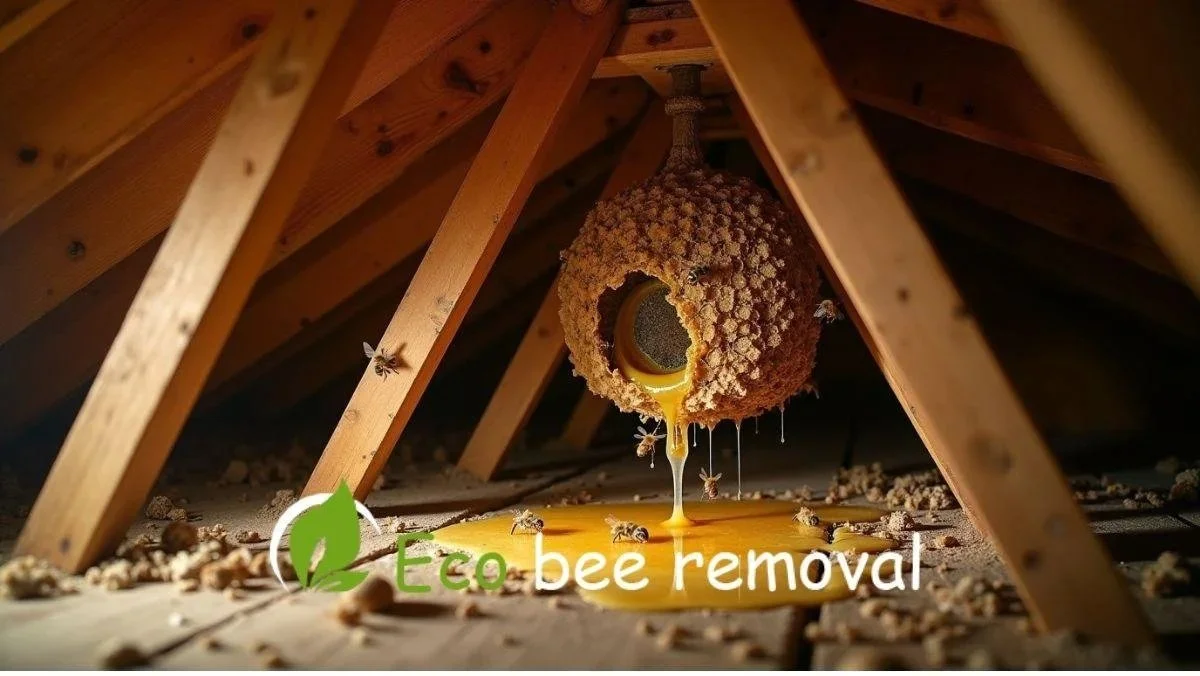
Honey Leaking From Attic Bee Hive in Summer
Professional live removal includes:
Safely relocating the bee colony
Removing all honeycomb and wax
Cleaning honey residue
Preventing future infestations
Protecting pollinators
By removing the hive before peak summer heat, homeowners can prevent honey from melting entirely.
Long-Term Damage Caused by Melting Honey
If left untreated, melted honey can cause serious structural and health problems:
Drywall damage and sagging ceilings
Insulation saturation and odor retention
Mold growth from moisture
Ant and rodent infestations
Expensive repairs exceeding thousands of dollars
Early detection saves both money and stress.
How to Prevent Honey Melting in Attics?
1. Seal Entry Points
Close gaps around soffits, vents, and rooflines.
2. Improve Attic Ventilation
Proper airflow helps regulate extreme temperatures.
3. Act Quickly
If you hear buzzing or notice stains, contact a bee removal professional immediately.
4. Avoid DIY Treatments
Store-bought sprays rarely solve the problem and often make it worse.
Final Thoughts: Science, Safety, and Smart Solutions
Honey melting in attics isn’t just a strange summer mystery—it’s a predictable scientific reaction to extreme heat. When bees build hives in confined attic spaces, rising temperatures cause honey and wax to soften, leading to leaks, stains, and serious property damage.
Understanding the science empowers homeowners to act early, protect their homes, and choose eco-friendly bee removal solutions that preserve both structures and pollinators.
If you suspect bees in your attic, don’t wait for honey to start dripping—professional live bee removal is the safest solution for everyone involved.