
Why Solar Panels in Florida Are Becoming New Hive Hotspots.
Florida is leading the nation in solar energy growth. With year-round sunshine, thousands of homeowners and businesses are installing rooftop solar panels to cut energy costs and reduce environmental impact. But as solar adoption rises, an unexpected issue is becoming more common across the state: bees nesting under solar panels.
At Eco Bee Removal, we’ve seen a sharp increase in service calls involving hives hidden beneath solar arrays. These modern energy systems are unintentionally creating ideal nesting environments for bees, especially in Florida’s warm climate. In this article, we’ll explain why solar panels attract bees, what signs to look for, and how homeowners can handle the problem without harming pollinators.
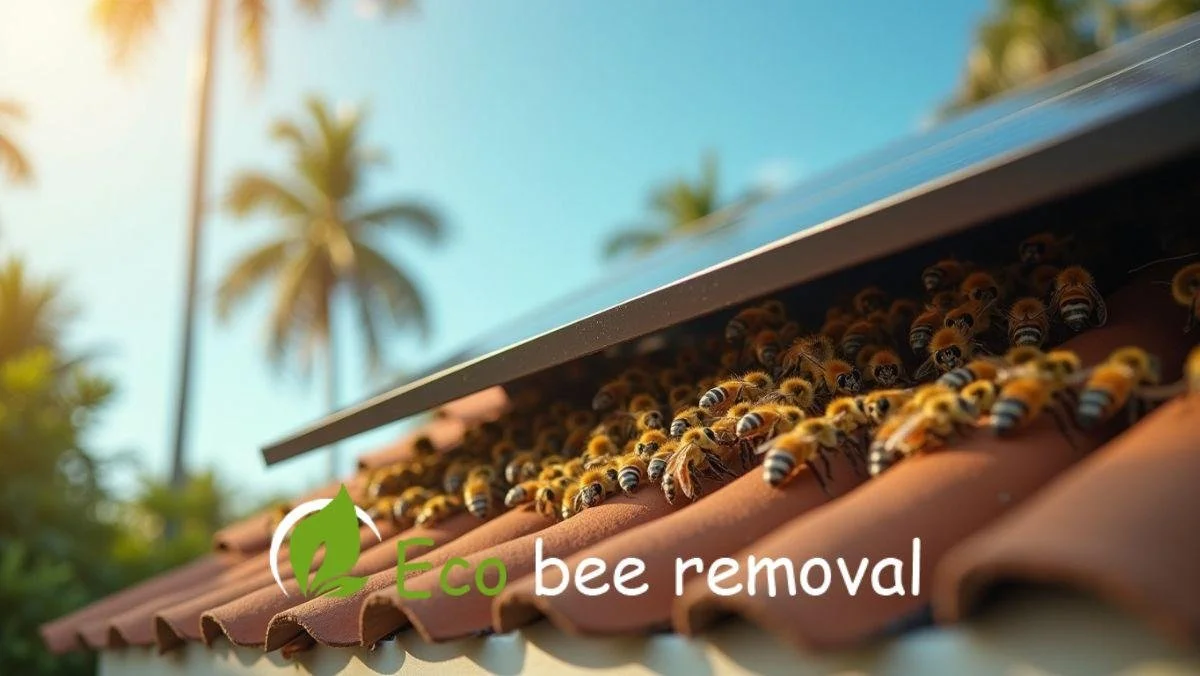
Eco-friendly bee removal from a house roof
Why Bees Are Attracted to Solar Panels
Solar panels weren’t designed for bees, but from a hive’s perspective, they’re nearly perfect.
1. Warmth Without Overheating
Bees thrive in warm, stable temperatures. Solar panels absorb heat during the day and release it slowly at night, creating a temperature-regulated space beneath them. Unlike attics or wall voids that can overheat, the airflow under panels keeps colonies comfortable year-round.
In Florida’s climate, this balance is ideal for honeybee survival and honey production.
2. Protection From Weather and Predators
Under solar panels, bees are shielded from:
Heavy rain
Direct sun exposure
Wind
Predators like birds and rodents
This makes solar panel gaps safer than trees or exposed structures. Once a scout bee finds this type of shelter, it doesn’t take long for a full colony to move in.
3. Elevated, Undisturbed Space
Bees prefer nesting areas that humans don’t frequently access. Solar panels are mounted high on rooftops, rarely disturbed, and often left untouched for years. This gives colonies the time they need to grow large without interruption.
4. Nearby Food Sources
Florida neighborhoods often include:
Flowering landscaping
Gardens
Parks
Native plants
These provide abundant nectar and pollen. When food is nearby and shelter is secure, bees see no reason to leave.
Why This Is Becoming a Bigger Problem in Florida
Florida’s environment exacerbates the issue more than in many other states.
Warm Climate Year-Round
Unlike colder regions, where bees go dormant, Florida bees remain active for most of the year. This means:
Longer nesting seasons
Faster colony growth
Increased honey production
A small hive under solar panels can rapidly grow into a massive colony within months.
Rapid Solar Expansion
Florida ranks among the fastest-growing solar markets in the U.S. More panels mean more potential nesting sites. Unfortunately, most solar installations do not include bee-proofing measures, leaving gaps perfect for hive entry.
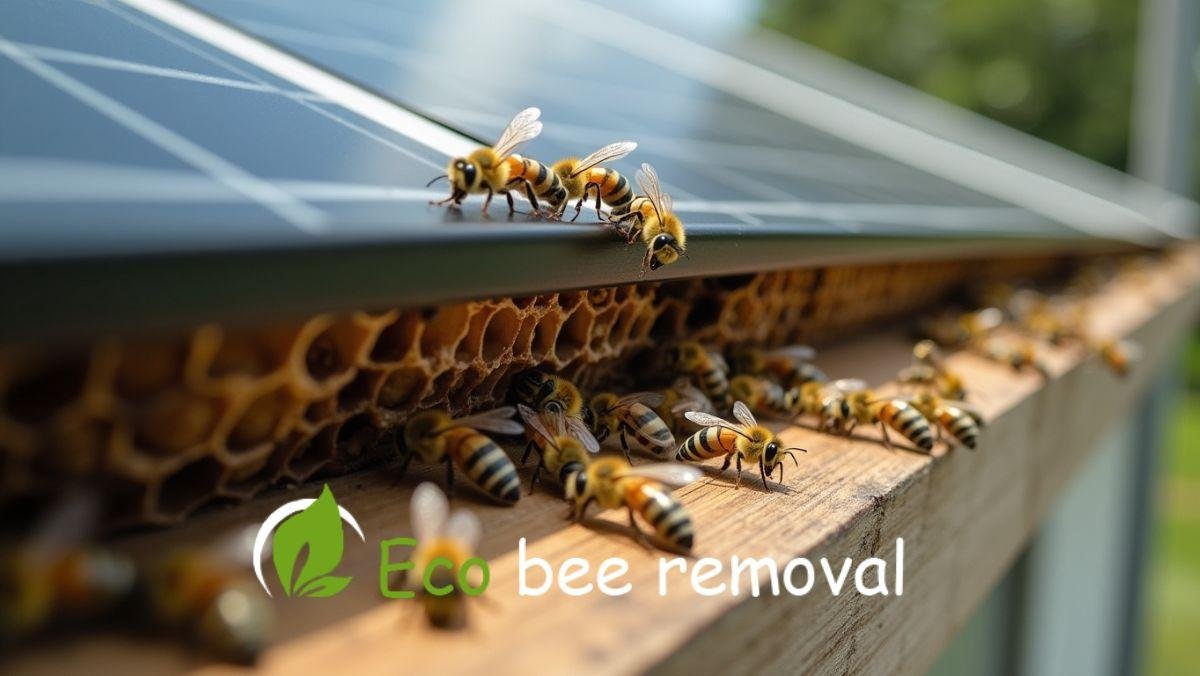
Eco bee removal from solar panel hive.
Signs You May Have Bees Under Your Solar Panels
Homeowners often don’t notice a problem until the colony is well-established. Watch for these warning signs:
Increased bee activity near the roofline
Bees flying in and out from the same spot
Buzzing sounds near panels
Honey dripping or staining the walls
Swarms gathering on or near solar arrays
Ignoring these signs can lead to structural issues, honey damage, and costly repairs.
Why DIY Removal Is Dangerous (and Ineffective)
Trying to remove bees from under solar panels without professional help is risky.
Structural Damage Risk
Solar panels are expensive and delicate. Improper removal attempts can:
Damage mounting systems
Void manufacturer warranties
Crack panels or wiring
Bee Aggression & Safety Concerns
When a hive is threatened, bees become defensive. Without proper protective equipment, homeowners risk:
Multiple stings
Allergic reactions
Dangerous falls from rooftops
Harm to Pollinators
Using pesticides or extermination methods can unnecessarily harm bees and potentially violate local environmental regulations. Bees are essential pollinators, and killing them disrupts Florida’s ecosystem.
The Eco-Friendly Solution: Live Bee Relocation
At Eco Bee Removal, we specialize in live bee relocation, especially from complex structures like solar panels.
How Live Relocation Works
Professional Inspection – Identify colony size, location, and panel access points
Careful Panel Access – Panels are temporarily lifted when necessary
Queen & Colony Removal – Entire hive is safely relocated
Honeycomb Cleanup – Prevents future infestations
Bee-Proofing – Install barriers to stop re-entry
Bees are relocated to safe environments where they continue pollinating rather than being destroyed.
Why Early Removal Matters
The longer a hive stays under solar panels, the worse the damage can become.
Honey can melt and seep into roofing materials
Wax can attract ants, roaches, and rodents
Larger colonies are harder and more expensive to remove
Early intervention saves money, protects your roof, and preserves pollinators.
How to Prevent Bees From Nesting Under Solar Panels
Prevention is always better than removal. Here are proven strategies:
Install Solar Panel Critter Guards
Mesh barriers seal the gap between panels and the roof, preventing bees and other animals from entering.
Schedule Regular Roof Inspections
Annual inspections help catch early hive activity before colonies grow.
Act Quickly When You See Scout Bees
Scout bees search for nesting locations before colonies form. Seeing a few bees repeatedly visiting the same spot is an early warning sign.
Solar Energy and Bee Protection Can Coexist
Solar power and environmental responsibility go hand in hand. Protecting bees while maintaining clean energy systems is not only possible—it’s essential.
By choosing eco-friendly bee removal and prevention methods, Florida homeowners can:
Protect their solar investment
Avoid structural damage
Support pollinator populations
Final Thoughts
Solar panels are an incredible asset for Florida homes, but they’ve unintentionally become new hive hotspots for bees. Understanding why this happens—and acting quickly when signs appear—can prevent costly damage and protect vital pollinators.
If you suspect bees nesting under your solar panels, never attempt removal yourself. Contact a professional bee removal service that specializes in live relocation and solar panel safety.
At Eco Bee Removal, we’re committed to protecting your home, your solar system, and Florida’s bees—because sustainable living should benefit everyone.