
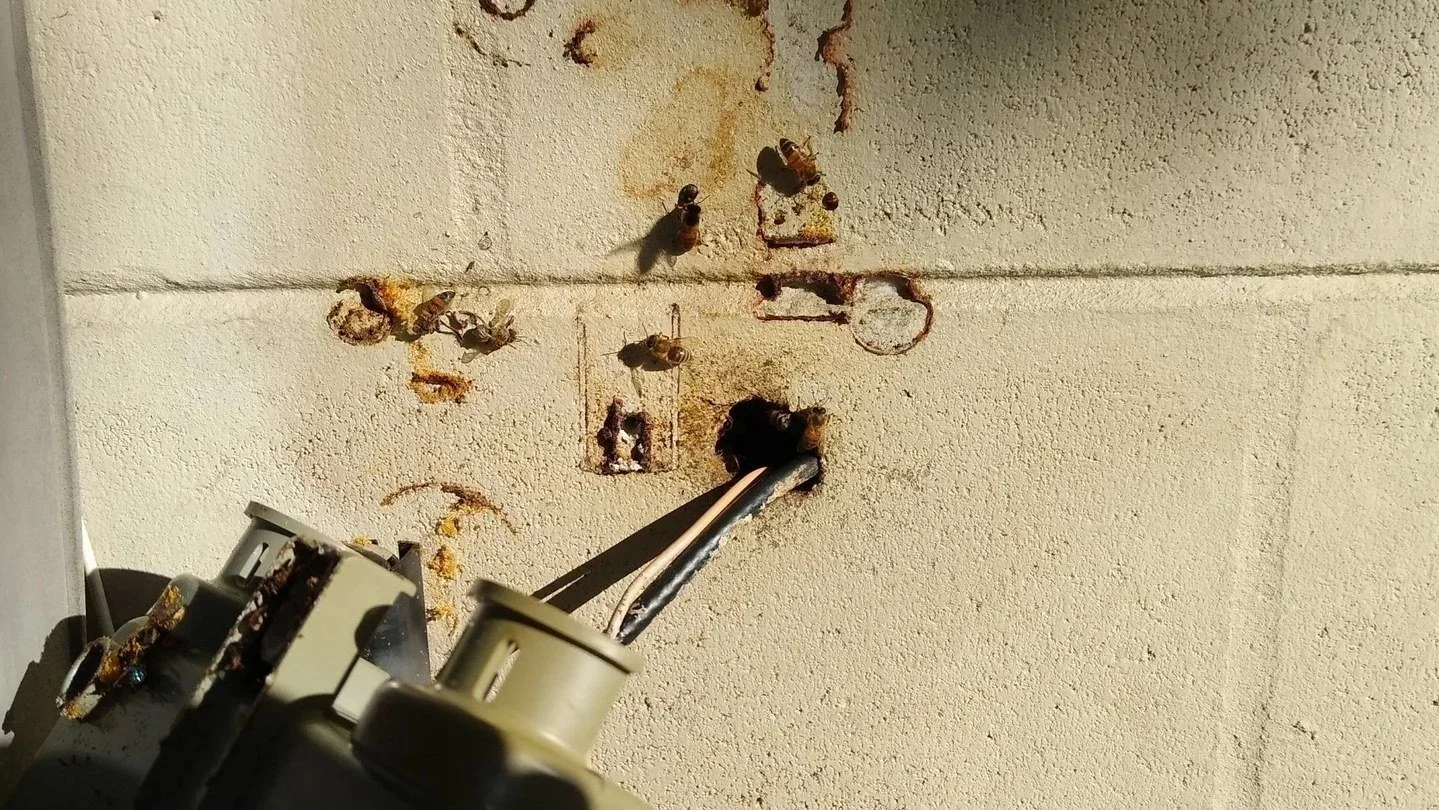
Honey bees entering a small opening in an exterior wall.
Hearing a steady buzzing sound inside your wall can be unsettling. You might notice honey bees flying around a small opening near your siding, stucco, or roofline. From the outside, everything may look normal. But behind that wall, an entire honey bee colony could be building a home.
For many Florida homeowners, discovering bees inside walls raises several questions. How large is the colony? Is there honeycomb inside the wall? Will the removal damage the house? Most importantly, can you remove the bees without killing them?
The answer depends on the colony's location and condition. Professional live bee removal involves much more than collecting the visible bees. It requires locating the hive, understanding how it is built, carefully accessing the hidden space, and removing the colony and its comb whenever possible.
At Eco Bee Removal, the goal is to protect both the property and the bees through careful, environmentally responsible removal and relocation.
1. A Small Opening Can Hide a Much Larger Colony
Honey bees do not need a large opening to enter a building. A small gap around siding, a crack in stucco, an opening near a roofline, or a space around a utility penetration may provide enough access for a colony.
Once inside, the bees look for a protected cavity where they can build their comb. Wall spaces are attractive because they offer shelter from rain, wind, and direct sunlight.
Behind the exterior surface, the colony may occupy a section of the wall cavity between studs, within a concrete block structure, or in another enclosed space. The actual size of the hive is not always visible from the outside.
This is why bee removal from walls should begin with a careful inspection rather than immediately sealing the entrance or spraying the bees.
2. How Professionals Locate the Hidden Beehive
Before opening a wall, a bee removal professional needs to understand where the colony is located and how extensive it may be.
The inspection usually begins by observing bee activity around the building. Professionals look for the entrance point, the direction of bee movement, and the areas where bees are gathering.
They may also listen for buzzing sounds and examine the surrounding structure. Depending on the building and the situation, specialized inspection tools may help identify the hive's location.
A few important details can guide the inspection:
The location where bees enter and leave the structure.
The amount of bee activity around the opening.
Buzzing sounds coming from inside the wall.
The type of construction and available access points.
Signs of honey, wax, or moisture around the affected area.
The purpose is to identify the most practical access point while avoiding unnecessary damage to the property.
3. What Is Actually Inside the Wall?
A hidden honey bee colony is more than a group of flying insects. Inside the cavity, bees build organized sheets of wax called honeycomb.
Depending on the colony's age and development, the hive may contain:
Worker bees: These bees collect nectar and pollen, care for young bees, maintain the hive, and protect the colony.
The queen: The queen is central to the colony's reproduction and produces the eggs needed to maintain the population.
Brood comb: These are sections of honeycomb containing developing bees at different stages of growth.
Honey stores: Bees store honey as a food source for the colony.
Beeswax and propolis: Beeswax forms the comb, while propolis is a sticky material bees use to seal and protect parts of their hive.
A colony that has been established for some time may have built a substantial amount of comb. That is why simply removing the visible bees does not necessarily solve the problem.
4. Carefully Opening the Wall to Reach the Hive
Once the hive's location has been assessed, the next step may involve creating an opening in the wall or another part of the structure.
This is one of the most delicate stages of professional bee removal.
The opening needs to provide enough access to reach the colony and its comb. At the same time, the professional must consider the building materials, electrical wiring, plumbing, insulation, and other features that may be hidden inside the structure.
There is no single opening method that works for every property. A concrete block wall, a wood-framed wall, and a stucco exterior each present different challenges.
The goal is to access the hive carefully, not to remove more building material than necessary.
Homeowners should avoid attempting this step themselves. Disturbing an active colony without proper equipment and experience can cause defensive behavior and increase the risk of stings.
5. How Live Bee Removal Works Behind the Wall
After gaining access to the colony, the professional can begin the removal process.
When conditions allow, live bee relocation is preferred over extermination. The exact approach depends on the hive's location, size, accessibility, and condition.
A typical removal may involve several steps:
Collecting the bees: A professional may use specialized equipment, such as a bee vacuum designed for careful collection, to gather bees from the exposed area.
Locating the queen: Finding and safely handling the queen is important because the colony is organized around her presence. The professional works to keep the colony together during the process.
Removing the honeycomb: The wax comb is carefully separated from the structure. Sections containing brood may require additional attention because they contain developing bees.
Transferring the colony: Depending on the circumstances, collected bees and suitable comb may be transferred into a managed hive or transport box for relocation.
Live removal requires patience and experience. Not every colony can be relocated in exactly the same way, and the outcome depends on the conditions found at the property.
6. Why Removing the Honeycomb Is So Important
One of the biggest mistakes in an incomplete bee hive removal is leaving the honeycomb behind.
Even after the bees have been removed, wax, brood, and stored honey may remain inside the wall. Over time, leftover honey can soften, leak, and create sticky stains. In Florida's warm climate, heat can make this problem especially concerning.
Unremoved hive material may also attract ants, cockroaches, and other pests. Residual wax and honey can create odors, and the old nesting area may become attractive to future swarms.
That is why honeycomb removal is an important part of addressing an established colony inside a structure.
Learn more about this issue in our guide: Why Removing Honeycomb Is More Important Than Removing Bees.
7. Cleaning the Cavity and Preventing Another Infestation
After the bees and accessible hive materials have been removed, the affected cavity should be inspected and cleaned as appropriate.
The professional may check for remaining wax, honey, debris, and other material that could cause problems later. Any necessary cleaning, drying, or treatment will depend on the condition of the space.
The original entrance point should also be addressed once the removal is complete and the cavity has been properly cleared. Suitable sealing and repairs help reduce the chance of another colony using the same opening.
Simply covering the entrance before removing the hive is not a solution. Trapped bees may search for another way out, while the remaining honeycomb can continue causing problems.
For a closer look at the risks, read: What Happens If You Seal a Beehive Without Removing It?.
8. What Should Homeowners Do When They Find Bees in a Wall?
If you notice bees repeatedly entering a small opening in your home, avoid disturbing the area.
Here are a few practical precautions:
Do not spray insecticides or chemicals into the opening.
Do not block the entrance with foam, caulk, or other materials.
Keep children and pets away from the active area.
Avoid tapping, drilling, or cutting into the wall.
Observe bee activity from a safe distance.
Contact a professional who can assess the colony and explain the available removal options.
If you are unsure whether the insects are honey bees or another species, a professional assessment can help identify them.
You can also learn more about how professionals find bees inside closed walls.
Frequently Asked Questions About Live Bee Removal Behind Walls
Can honey bees be removed from inside a wall without killing them?
In many situations, live removal and relocation may be possible. The method depends on the colony's location, size, accessibility, and condition. A professional can assess the situation and explain the available options.
How do professionals know where the beehive is inside a wall?
They observe bee entry and exit activity, listen for sounds, examine the building structure, and may use specialized inspection tools when appropriate. The goal is to locate the colony before opening the affected area.
Does live bee removal include removing the honeycomb?
Not automatically. Bee collection and honeycomb extraction are separate parts of the work. Homeowners should confirm whether the proposed service includes removing the comb, honey, and other hive materials.
Is it safe to seal a hole where bees are entering?
No. Sealing an active hive entrance without removing the colony can trap bees inside and create additional problems. The hive should be properly assessed and removed before the opening is sealed.
How much does bee removal from a wall cost in Florida?
The cost depends on factors such as the colony's size, location, accessibility, building materials, and the amount of honeycomb that needs to be removed. Contact a professional for an assessment and pricing based on your specific situation.
Protect Your Home and Help Save the Bees
Discovering a honey bee colony behind your wall can be stressful, but the right approach can protect your property while giving the bees an opportunity to survive.
A complete live bee removal process involves more than collecting the bees. It includes locating the colony, carefully accessing the hive, removing the bees and honeycomb where possible, cleaning the affected area, and addressing the original entry point.
Eco Bee Removal provides humane bee removal and relocation services throughout Florida. If you suspect honey bees are living inside your wall, attic, soffit, or another part of your property, do not spray or seal the opening yourself.
Contact Eco Bee Removal for a free consultation and to discuss your bee removal options.
Call (888) 282-1886
Explore Our Live Bee Removal Services
Eco Bee Removal — Save bees and be bee-blessed!